But Leftists will be be disappointed, it’s 800 years before their favourite conflict and supports Christian crusaders against Muslims. This is a song written in the early 13th century by Walther von der Vogelweide, the most celebrated German medieval lyric poet.
The Palästinalied was written at the time of the Fifth Crusade (1217-1221). Its subject is the Christian gospel told from the perspective of a pilgrim setting foot in the Holy Land. The song’s conclusion refers to the crusades themselves, asserting that, in view of the claim of all three Abrahamic religions to the land of Palestine, the Christian claim is just: (Al diu werlt diu strîtet her / Wir sîn an der rehten ger / Reht ist, daz er uns gewer “All the world is warring here [in the Holy Land] / Our claim is the just one / It is right that He [God] grant it”).
The poem is written in Middle High German, so not very intelligible to those who know modern German. It is one of the few songs by Walter for which a melody has survived. The oldest source for the melody is the Münster fragment, which is dated to the early 14th century.
Maori and Pakeha embrace outside New Zealand’s Parliament — wouldn’t it be good instead of all the racial hostility TPM/Green/Labour have stirred up? (AI image)
For years, Hobson’s Pledge was one of the few organisations willing to speak up publicly — calling for an end to division, a firm deadline on historical Treaty settlements, and the eventual closing of the Waitangi Tribunal. Back then, political commentators claimed it couldn’t be done.
In the past few weeks, we have seen a very clear shift in the conversation, and the political landscape, when it comes to promoting equal rights, is changing for the better.
We now have two out of the three governing parties aligned with our core vision:
The ACT Party has officially proposed policy to complete all remaining historical Treaty claims, end the Tribunal’s contemporary jurisdiction, and disestablish the Tribunal entirely once historical work is finished.
New Zealand First and Winston Peters have gone even further, pledging to immediately abolish the Tribunal and set a clear end date for all pre-2008 claims.
David Seymour and the ACT Party made their announcement at the start of September.
Over the weekend, Winston Peters announced that NZ First will campaign on immediately abolishing the Waitangi Tribunal and tabling legislation in their first 100 days to replace it with a final Treaty of Waitangi Completion Commission.
He publicly called out the Tribunal for becoming a “make-work organisation” that interferes with democratic law-making – concerns we at Hobson’s Pledge have been raising for years.
This is a massive breakthrough.
I recently wrote to Winston Peters on behalf of Hobson’s Pledge urging NZ First to take a strong, unequivocal stand—and they have delivered.
See an excerpt of our letter to Winston Peters here, sent on 14 September 2026:
“As New Zealand approaches the 200th anniversary of the signing of the Treaty in 2040, many New Zealanders are asking whether there is a clear endpoint to the settlement process and whether institutions established to address historical grievances should continue indefinitely once that task has been completed.
Hobson’s Pledge is keen to ensure our supporters understand where NZ First stands on these matters. In particular, we would welcome your responses to:
Whether NZ First supports the principle that historical Treaty settlements should be completed as full and final settlements.
Whether NZ First supports the disestablishment of the Waitangi Tribunal once all historical claims have been resolved.
We also encourage you and NZ First to adopt a similar policy position as the ACT Party and to make it part of any future coalition policy agreement.
Hobson’s Pledge will welcome your timely and clear statement on these matters so in turn we can share with our supporters.”
That leaves just one government party holding back complete reform: the National Party.
I wrote a letter to Christopher Luxon as well, but so far there has been no reply.
With two out of three governing parties now committed to ending or disestablishing the Waitangi Tribunal, Christopher Luxon and National can no longer hide on the fence. But as we move deeper into this election period, National will only move if they feel unrelenting pressure from everyday New Zealanders who want equal citizenship and a single law for all.
This is our best opportunity in a generation to finally close down the Tribunal for good, but running a campaign that National cannot ignore requires real resources.
Public Relations is a fundamental part of EU/NATO’s war planning
by Andrew Korybko
Zelensky has an interest in implicating Russia in an attack on NATO so as to exploit the latest hysteria.
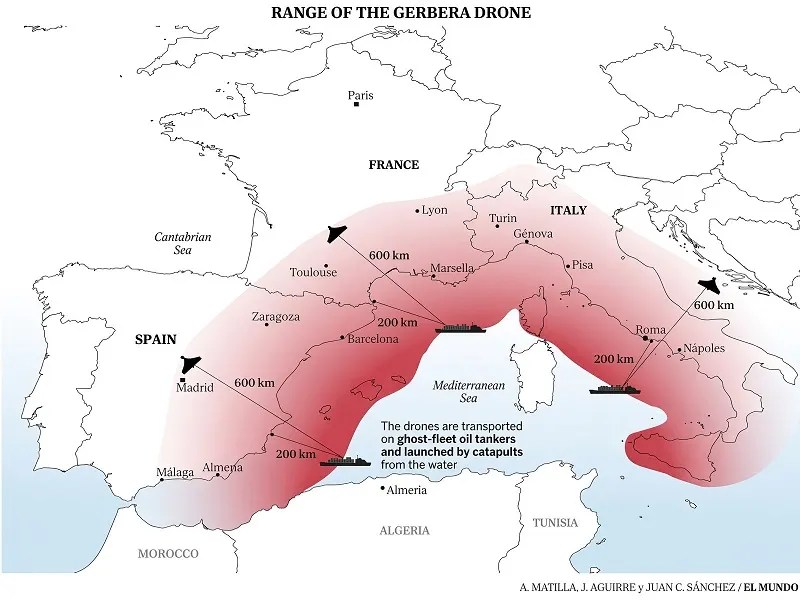
French President Emmanuel Macron and Italian Defense Minister Guido Crosetto debunked a recent report from Spanish media that cited an anonymous source close to the Lithuanian Defense Ministry to claim that the CIA allegedly believes that Russia is plotting drone strikes on Southern Europe. The context concerns the hysteria among some European leaders that Russia might soon test NATO’s resolve. Finnish President Alexander Stubb earlier declared that such talk is counterproductive to EU interests.
It was therefore refreshing that the abovementioned officials followed his lead instead of going with the narrative flow for whatever their ulterior motives might have been. Nevertheless, the fact that this story was planted in the media in the first place and by an anonymous source close to the Lithuanian Defense Ministry at that is unnerving, especially amidst speculation of an impending Ukrainian false flag seeing as how Kiev has an interest in implicating Russia in an attack on NATO so as to exploit the latest hysteria.
Earlier this year, Ukraine attacked one of Russia’s “shadow fleet” vessels in the Mediterranean from a drone base in Libya while one of its naval drones washed ashore on a Greek island in the Ionian Sea, both developments of which confirmed that Kiev has both aerial and naval drone capabilities in the area. It could therefore employ them for false flag attacks in Southern Europe in an attempt to manipulate European NATO (E-NATO) into at least more aggressively cracking down on Russia’s “shadow fleet”.
On that topic, “Putin Threatened Tit-For-Tat Seizures Of Foreign Vessels” in August during his visit to the Pacific Fleet headquarters in Vladivostok, the reciprocal escalation of which could be exploited by E-NATO to climb the escalation ladder even further at the risk of making a hot war by accident more likely. The unexpected breakthrough in Polish-Belarusian ties after their foreign ministers’ first meeting in a decade, however, could lead to a thaw in the New Cold War as explained here in detail.
Zelensky might not want that to happen for many reasons, not least of which is that he’d probably be coerced by the West into making some painful compromises to Putin prior to holding long-delayed elections that would likely result in him losing power given his unpopularity, ergo his false flag motive. Paired with Ukraine’s capabilities as mentioned earlier in this analysis, the scenario of it attempting false flag drone attacks against Southern Europe is uncomfortably credible, but the threat is still manageable.
Even if it can’t be averted, the creation of crisis-control channel between the US, E-NATO, and Russia as proposed in this piece here that was referenced in the previously cited one about a thaw in the New Cold War could prevent the hot war by accident that was earlier warned about, The news that this has been created might also deter Zelensky if he comes to believe that his potentially impending plots would fail to derail a partial thaw in tensions and might even backfire if evidence then implicates Ukraine.
Be that as it may, no such crisis-control channel presently exists, so the window of opportunity for Zelensky to authorize a Ukrainian false flag drone attack on Southern Europe for implicating Russia remains open. It’s therefore urgent that one is created otherwise he could spark World War III through these means in the worst-case scenario. With Finland, France, and Italy pushing back against the latest hysteria amidst the Polish-Belarusian breakthrough, the US now has a greater chance of mediating this.
Burnham is true to NATO actions, despite his words
by Finian Cunningham on Strategic Culture
So, Britain announced with much fanfare this week that it was imposing sanctions on Israel’s illegal settlements in Palestine. Note that the sanctions are not against the Israeli state, but rather a much narrower definition: Israeli entities in the Occupied Territories.
British Prime Minister Andy Burnham claimed that the move was an example of Britain giving international leadership to stand against oppression and injustice.
Addressing the British Parliament, Burnham said: “In this difficult and dangerous world, Britain has to stand for something, Britain has to show leadership, Britain has to stand for fairness against injustice… That is what the British people expect of us, and that is what this government will do.”
Several other European states and Canada have also joined the British-led initiative to ban trade and investment with companies doing business in the Occupied Territories of the West Bank.
Israel’s occupation is illegal under international law, yet Britain, the European Union and the United States have done nothing in the way of imposing sanctions. Sanctions are something the West prefers to impose on Russia, Iran, China, Cuba, North Korea, among others.
In announcing the sanctions, the United Kingdom’s foreign minister Ed Miliband told the House of Commons that “Britain was a country that upholds its values at home and around the world, fighting against oppression and suffering, and standing up for what is right.”
The pious tones from London about Israel’s “ethnic cleansing” are not convincing.
For starters, the supposed sanctions do not cover British components for the F-35 fighter jets that the United States sells to Israel. The British parts are crucial for flying the US-made stealth aircraft. The warplane has played a major role in razing Gaza to the ground. Also not included in the sanctions are drones and surveillance equipment that British firms supply to the Israeli military. All those components are crucial for enabling the nearly three-year genocidal violence that Israel has conducted in Gaza.
If the British government were serious about “standing against oppression,” it would go a lot further than focusing on violations by Israeli settlers in the Occupied Territories. The pogroms and construction of new settlements are carried out with the full assistance of the Israeli state, not just by gun-wielding fanatical settlers. Britain and other Western states have provided the legal and diplomatic cover for Israeli war crimes.
In any case, the supposed measures against Israeli business and exports from the West Bank are minimal. A recent Al Jazeera investigation found that Britain has billions of dollars invested in companies that are intimately involved in illegal settlement building. We can be sure that London is not going to cancel investments.
Total British-Israeli trade is estimated at $8 billion a year, including lucrative military items. The amount of business that Britain does with the Occupied Territories is about 1 per cent of its total trade with Israel.
Burnham and Miliband said the British government did not support boycott and divestment sanctions against the state of Israel. Both of them were at pains to emphasize that the measures are nominally limited to the violations going on in the Occupied Territories, not what Israel is doing right across Palestinian land, including Gaza, which is a genocide.
So there you have it. Britain’s “moral leadership” is nothing but tokenism and duplicity.
Should we expect anything else? After all, as former British diplomat Craig Murray pointed out this week, Burnham’s government has decided to give top-secret information for building cruise missiles to the corrupt Kiev regime. Murray warns that the Storm Shadow missiles will soon end up being sold on the black market, given the rampant corruption of Ukraine under the Zelensky cabal.
Britain is also supplying this NeoNazi regime with long-range drones that are being used to target Moscow and Russian civilians.
Is this standing up against oppression and for supposed British values?
What’s really behind London’s belated show of concern for Palestinians?
As Burnham and Miliband alluded, it’s all about Britain appearing to show international leadership. It’s a cheap way to burnish London’s “moral posturing” as a defender of “humanitarian values.”
Israel has hit back with the usual denunciations of “anti-semitism” and by closing down the British consulate in East Jerusalem. But for London, these repercussions are bearable for the bigger gains of British international PR.
As noted above, the lion’s share of its lucrative trade with Israel will go on, business as usual.
The other key motive for the Burnham government is that it realizes that a majority of the British public has become staunchly opposed to the Israeli regime. The three-year genocide has opened the eyes of many Britons (and those of other Western nations) to the historical injustices and illegal occupation of Palestinian lands. Israel is increasingly seen as a pariah, apartheid state that should be prosecuted for war crimes.
Britain’s role as the former colonial power in the Zionist annexation of Palestine is one of deep complicity and shame.
Andy Burnham was shoehorned into Downing Street to take over from the hopeless and hapless Labour leader Keir Starmer. The British establishment has bet on Burnham to shore up its imperialist interests by boosting military spending and deepening involvement in the NATO proxy war against Russia in Ukraine.
However, Burnham’s popularity has quickly worn off as he looks like Starmer 2.0.
KCDC have recently run two surveys of residents’ opinions, with one having 56% of the responses from older people (over the age of 60), and one with 61% of the responses from older people. Why is KCDC taking a contradictory stance on the reliability of the respective survey results?
Last week we reported on the Council meeting that considered the responses to its survey on priorities for the next Long Term Plan. We reported that Councillors were sceptical of the survey’s results, as 56% of those who responded to the survey were over the age of 60.
We are worried by this attitude, many of you thought so, too.
So we looked at the other recent survey that the Council has done … on the community’s view of possible local body amalgamation options.
You’ll recall that the survey showed that 43% of the 2,770 responses supported the Council’s own preference for a single Kapiti Coast authority, followed by combining with Horowhenua, at 36.2%.
Mayor Holborow gushed at the result: “I don’t think anybody was really surprised by the result of our survey,” the Mayor was quoted in Te Pou/The Post newspaper. “What we hear from the community is that they think we’re in pretty good shape.”
What’s disturbing is that 61% of respondents to the Council’s amalgamation survey were over the age of 60 – even more than the supposedly unreliable Council survey on the Long Term Plan. So, why is the Council sceptical of a survey because 56% of respondents were over the age of 60, when it wholeheartedly endorses a survey with 61% of older people as respondents?
The only conclusion anyone can draw is that KCDC will unquestionably endorse the results when a survey produces the result the Council wanted all along. Survey results are, however, regarded as questionable when it produces a different answer to what the Council wanted.
At last week’s Council meeting, Councillors talked about trying to find different way to get the views of people who don’t engage with surveys. We think this is a good thing to do – as long as the Council treats all responses equally rather than selecting the views that best lines up with a pre-determined conclusion.
We believe the approach the Council took to the amalgamation survey was the right one. It respected, and equally weighted, the views of all of the people who responded. Its didn’t try to segment the views of the younger people from the older people, so it could cherry pick who said what.
We believe the Council should do the same with the Long Term Plan survey. Council should respect that you took the time and effort to respond. It shouldn’t discount your views just because you’re the “wrong” demographic. And then it should act on what you said to them.
Councillors will only change their behaviour if you demand it. Write to your local Councillor and let them know that, whether you are young or old, your views should be treated equally.