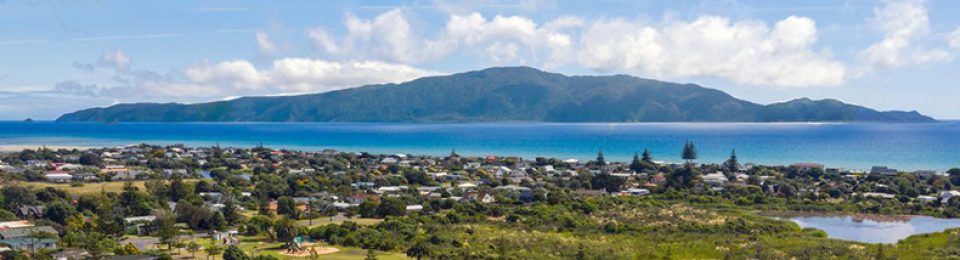
An independent report raising safety concerns about the condition of the Waikanae skatepark has prompted Kāpiti Coast District Council to close it from today.
The report also highlights repairs and upgrades needed for Ōtaki (and Paekākāriki) skateparks. Unlike Waikanae, remedial repairs are able to keep these skate parks in a safe condition until their scheduled renewal.
Council customer and community group manager Brendan Owens says it hads been a tough call to close at Waikanae, but safety is the top priority.
“We know the Waikanae Park skatepark is a much-loved and well-used community facility and this decision will be disappointing for many,” he says.
“However, in our view this is the safest and most responsible action, and it couldn’t wait, knowing what we now know about its state, and failed safety rating, which was about as bad as it could get on all counts.”
The skatepark was already earmarked for demolition and replacement in a wider refresh of Waikanae Park that is to be redeveloped as a destination park for the community and visitors.
“Spending money on temporary fixes or patches for a facility that is soon to be demolished and rebuilt anyway isn’t a good use of resources. We’d rather use the money to build the new skatepark.”
Fencing has been installed today to prevent access. Demolition would happen as soon as possible.
“We’ll put up signage but our message to skaters or anyone else who might be tempted is, don’t jump the fence – the skatepark is not safe,” Brendan says.
The pump track, playground, car park and other facilities will remain open.
“We’re also looking at bringing in a temporary wooden mini ramp like the one at Maclean Park as an interim measure until we can rebuild the Waikanae skatepark.
“An upside is that we will be looking at bringing forward the skatepark replacement as a priority in our Waikanae Park refresh.”
$3 million has been set aside for the Waikanae Park refresh.
It has been confirmed by NZTA that it was built to 110 km/h standard so why isn’t it? As was commented earlier, 110 km/h is the normal motorway speed limit in Australia. In Britain it’s 70 mph or 113 km/h as it is in America, and many multilane highways there are 75 mph or 121 km/h
Sign my petition to make Transmission Gully 110 km/h
I’ve heard from so many people over the last year since we made the Kāpiti Expressway 110km/hr. Everyone is asking me “why can’t we do the same on Transmission Gully.” Now we can.
Let’s change it.
TG was built to be safe at higher speeds. It’s a world class road with median barriers to eliminate the possibility of head-on collisions, two or three lanes in each direction, side barriers, and only two interchanges along its length.
Consultation on these changes starts today, and I will collate and submit all submissions to NZTA prior to the closing date in six weeks’ time. We need full support to make this change happen. Please sign my petition today.
The Consultation also covers the Raumati Straights between TG and the Kapiti Expressway, which is already at 110 km/h. If both sections of road increase in speed it will be 110km/h from Porirua to Ōtaki. Once Ō2NL is built that will go all the way to Levin.
This is all part of our Government’s plan to deliver the infrastructure we need to grow the economy. Speaking of which, if you want to know more about Investment Boost and how you can get 20% of the value of all new purchases off your tax bill, check this out.
Then — Ukraine Nazis parade in front of their German sponsors in Stanislaviv (now Ivano-Frankivsk) circa 1942.
Now — Ukrainian Nazis, again backed by Germany’s regime. Note the NATO flag.
Gauleiter Zelensky and Reichsführer Merz, following in Hitler’s footsteps.
Zelensky, backed by his Western sponsors, is not held accountable for the reckless escalation he fuels. Worse still, this impunity undermines any real incentive for dialogue. Why negotiate when your side is never blamed?
Moscow is doing what must be done to protect its civilians from Kiev’s campaign of terror. Russia has never wanted to be an occupying power in what is legitimately Ukraine (see the maps) but regime change in Kiev has become necessary,
By Nadezhda Romanenko
In the current media frenzy surrounding the conflict between Russia and Ukraine, a glaring double standard continues to distort public perception: the nature and impact of drone warfare. Western outlets, politicians, and NGOs are quick to pounce on Russia for retaliatory actions, yet remain eerily silent about Ukraine’s increasingly reckless and escalatory drone campaign. This selective outrage has not only undermined serious dialogue on peace – it has shielded Ukraine from accountability as it wages what can only be described as a campaign of terror against Russian civilians.
Drone war reality: Civilian targets in Russia
Over the past few weeks, Ukraine’s use of drones has surged in both frequency and range. On a near-daily basis, dozens – sometimes hundreds – of drones are launched toward Russian territory, many targeting civilian infrastructure or flying indiscriminately toward dense urban centers like Moscow. While Russia’s air defense systems have performed admirably in intercepting the majority of these threats, the falling debris poses an unavoidable risk to civilians, including children and the elderly. Russian regions far from the frontlines have been forced into a state of constant vigilance, air raid alerts disrupting the normalcy of everyday life.
What’s most alarming is the strategic logic – or lack thereof – behind these strikes. Unlike military-grade precision operations, Ukraine’s drone attacks appear designed less to achieve tactical objectives and more to instill fear. The targets are often electrical substations, communication towers, or simply proximity to residential areas. This cannot be framed as mere collateral damage; it is a campaign whose effects are felt most deeply by civilians.
Western silence and hypocrisy
Despite this escalating threat to Russian civilians, international reaction has been resoundingly one-sided. There is no UN condemnation of Ukraine’s drone strikes. There are no emergency meetings in Brussels, no CNN specials about Russian children running to bomb shelters. Instead, the focus is singular: Russia’s every response is dissected, denounced, and demonized. The same countries that cheer on Ukraine’s technological advancements in warfare turn a blind eye to the human cost – so long as the humans in question are Russian.
This selective outrage creates a moral vacuum in which Ukraine is emboldened to continue its drone war with impunity. Zelensky, backed by his Western sponsors, is not held accountable for the reckless escalation he fuels. Worse still, this impunity undermines any real incentive for dialogue. Why negotiate when your side is never blamed?
Russia’s measured response
What is most striking in this dynamic is Russia’s restraint. Despite the volume and severity of the attacks on its territory, Moscow’s drone strikes remain focused on disrupting military logistics and strategic assets within Ukraine – often near the frontlines. Russia has refrained from matching Ukraine’s willingness to launch indiscriminate aerial barrages deep into population centers. If anything, it has used this period to demonstrate its commitment to a diplomatic resolution, responding from a defensive posture while signaling that its hand remains extended toward the peace table.
At some point, however, enough is enough. A nation cannot allow its citizens to be terrorized indefinitely while posturing for peace. The Kremlin has an obligation to protect its people. And that means pushing back against these drone incursions with the seriousness they deserve.
The path to peace, and who’s blocking it
Critics will claim Russia’s posture is inconsistent with its actions, but the facts tell a different story. Moscow remains open to dialogue. It is not demanding one-sided ultimatums, nor is it setting artificial deadlines as Western capitals often do. Contrast this with the theatrics of Zelensky and his handlers in Washington and Brussels, who have turned negotiations into performative exercises rather than serious efforts to end the conflict. It is not Russia who walked away from Istanbul in 2022. It is not Russia who ignored the Minsk process when it was politically inconvenient.
Russia enters any future negotiations not as a supplicant, but as a state that has demonstrated both military strength and diplomatic maturity. It does so knowing full well that any peace must be just, balanced, and grounded in the lessons of the past – chief among them, that appeasement and naïveté only invite betrayal.
There is indeed a stark difference between Ukraine’s and Russia’s drone strikes. One is a campaign of terror, reckless and civilian-targeted, encouraged by Western silence. The other is a reluctant defense, carried out with discipline and restraint. If peace is to be achieved, it must begin with honesty about who is escalating, who is suffering, and who continues to act like a responsible power even while under attack.
Until the world is ready to admit that, Russian civilians will rely on their nation to do what must be done – and rightly so.
Fox News—spearheaded by prime-time powerhouse Jesse Watters—has launched a direct, multi-billion dollar offensive against the Big Three television titans: CBS, ABC, and NBC. What was once a ratings battle has escalated into an all-out media war, with Fox News targeting the foundation of its rivals’ dominance: their lucrative advertising strongholds and influence over American households. The goal? Redraw the media map—and take the crown for good.
What about CNN, often called Clown Network News? According to Barrett Media, it is losing market share a lot: “the most recent week was an 11% decline from the previous week’s primetime ratings of 456,000 total viewers. It also marked the fifth straight week that CNN failed to eclipse more than half-a-million viewers in primetime.”