Time to impeach them both.

31 Friday May 2024
Posted in Uncategorized
Time to impeach them both.
31 Friday May 2024
Posted in Uncategorized

President Trump Found Guilty On All 34 Counts by New York Jury
As expected!
The Democrats have converted America’s justice system into their personal political tool. They are using ‘lawfare’ by means of corrupt courts against their political opponents—especially President Trump and his close associates.
President Trump will be president in November, no matter what the verdict is in New York City.
—The GrrrTeam
Much more at the post on GrrrGraphics.com
31 Friday May 2024
Posted in Uncategorized

Mike Hosking put it well when he said yesterday morning, “What New Zealand needs is a shock. A surprise. A blockbuster. A transformation.“
I’m sorry to say, but Hosking isn’t going to be happy with what Nicola Willis has delivered.
Nor should you.
Callum, Connor, and I have been studying the fiscals, announcements, and economic projections.
Our summary is below, plus a list of our media releases listed at the bottom.
A friend of the Taxpayers’ Union sitting in the Parliamentary Gallery watching the speeches, just text to say that at least three Government Ministers were scrolling Taxpayers’ Union social media pages while Nicola Willis was giving her speech! If you’re more of a pictures than words type a millennial, we’re over on Facebook and X (once known as Twitter) right now covering the Budget. You should give us a follow
If you were looking forward to a bonfire of wasteful initiatives, you’ll be disappointed. Other than the already announced scrapping of the first home-buyer demand subsidy, nothing of material (from a fiscal, rather than a political point of view) is obvious in today’s Budget.
In her Budget Speech, Ms Willis talked-the-talk, correctly pointing out that “Government spending has ballooned”, but the actual numbers fail to walk-the-walk.
Instead of popping Grant Robertson’s spending balloons, the more we got into the details, the clearer it became that Nicola Willis has added helium!
Willis’ 2024 Budget spends $13.8 billion more than Robertson’s 2023 Budget! That is $2,687 extra spending per household.
In response to Grant Robertson’s final budget, Christopher Luxon described spending $137 billion/year as an “addiction to spending” (he said it no less than 10 times in last year’s Budget debate speech).
Wait till Luxon sees what Nicola Willis is doing! As you’ll see on tables (see p 156 under “Core Crown expenses) this year’s extra $13.8 billion (that’s 13,800 million dollars) for this year coming is just the beginning.
If Grant was the addict, what does that make Nicola?
The best the Government can claim is that they plan to increase spending but at a slightly lower rate than what Grant Robertson had set course on.
Nicola Willis has delivered a tax relief package almost identical to what National announced prior to the election. There is no sign ACT got any traction at all in terms of arguing for a flatter tax structure.
But to ensure there are ‘no losers’, Nicola Willis takes a leaf out of Labour’s book: tinkering with bureaucratic tax rebates and credits, rather than tackling the real issue of even those on modest incomes continuing to pay 30 cents in tax on every extra dollar earned.
But, let’s not be too negative – here at the Taxpayers’ Union, we’ll take tax relief any day of the week.
From 31 July (Willis claims IRD and payroll software delays mean it needs to be four weeks after than the start of the Government’s fiscal year on 1 July) the following new tax rates will apply:
Click here for details of the tax changes.
The Government has launched a “Tax Calculator” on the Treasury’s “Budget 2024” website. You can calculate how the tax changes will affect you here.
Despite talking throughout the election campaign about the 14 years of fiscal drag/inflation pushing income earners into higher tax brackets, Nicola Willis delivered just half of what is required to put that right.
Willis’ $25-a-week offer to the average worker would only take their tax bill back to 2021 levels, locking in the 11 years of stealth tax hikes she was elected to fix. Even that’s a sleight of hand, as the $10-a-week Independent Earner Tax Credit won’t be available to anyone on over $70k.
And it gets worse. Minister Nicola Willis is relying on the very mischief Opposition Finance Spokesperson Nicola Willis used to hammer Grant Robertson about to get her own books back into surplus!
By not attaching the new income tax thresholds to inflation or wage growth, the proportion of income tax workers pay over time stealthily increases. That is what she is relying on to get back to surplus, with tax revenue forecast to continue growing, despite today’s tax relief package.

Answering questions from media in the Beehive lock-up, Willis suggested that ‘this is it’ and that no further tax relief is coming until the books are back in surplus in 2027/28. By then, she will have basically recovered back everything she’s delivered in tax relief today through the inflation/fiscal drag tax!
There might have been a change in Government, but is this really a change in direction?
Make no mistake, if the shoe was on the other foot and this Budget was from Labour – she’d be calling it out as ‘shortchanging Kiwis’.
On debt, things are grim. The good news is that Core Crown Debt for the current year is ever so slightly below the pre-Christmas forecasts (we get to wind the Debt Clock back a few weeks – Yay!)
But, because the 2024/25 deficit is larger than Robertson’s 2023/24 Budget, the Debt Clock will now be running faster for the year ahead!
And instead of balancing the books, the projected surplus (assuming no major economic shocks) has been pushed back a year to 2027/28. Hitting this the year earlier was National’s top of its five pre-election “Fiscal Principles”.
So much for tackling wasteful spending…
Tick tock, tick tock… goes the Debt Clock. 
This is my 10th Budget lock-up. Like the Treasury’s cold sausage rolls, you can be sure that the Minister of Finance will alleviate concerns about unaffordable spending by reassuring the media that while the ‘operating allowance’ (the size of the envelope for new spending) is large this year, they are being ‘prudent’ by reducing it over future years.
That makes the long term Treasury projections look better (Treasury have to take the Minister’s word at face value for future spending plans).
But the smaller allowances almost never hold once next year’s budget actually arrives.
In addition to using fiscal drag to grow the Government’s tax-take over time, Nicola Willis has also pulled the very trick she complained about when in Opposition to make it look like surplus in 2027/28 is on track.
We set three key tests for yesterday’s Budget:
1. Reduce taxes by $49/week for the average income earner
Nicola Willis needed to deliver $49 per week for the average earner on $66,196 a year to reset tax brackets for 14 years’ worth of inflation. She’s delivered just half of that – $24.89 a week.
This amounts to just the last three years of high inflation pushing people into higher tax brackets. The Government has not delivered tax relief, they’ve shortchanged Kiwis who are continuing to do it tough.
2. Cut wasteful spending
Government spending has increased by 84 percent since 2017 and the Public Service has added over 18,000 extra bureaucrats. Today was the opportunity to put that right.
It’s not to be. Instead of right-sizing the Public Service, Budget 2024 effectively locks in the Ardern-Robertson post-Covid level of big spending government.
In the long-term projections published with today’s Budget, even by 2038, Nicola Willis will still have higher Government spending as a share of the economy than Jacinda Ardern’s big spending 2019 “Wellbeing Budget” lolly scramble.
3. Stop racking up debt
The Government has already racked up $90k in debt for every Kiwi household.
Not only has Willis failed to balance the books for this year (actually, she’s made it worse – running a higher deficit than Robertson last year), the date for surplus has pushed back a year!
That means, instead of Stopping the Debt Clock, it’s going to tick faster, for longer.
Maybe there’s still a need for the Taxpayers’ Union after all…
 | Jordan Williams Executive Director New Zealand Taxpayers’ Union. |
So what does ACT have to say? From David Seymour:-
The Government has just unveiled its 2024 Budget. It’s all your money, so I’d like to be frank about how ACT is working to treat your taxes and your efforts with respect.
Just as your household has made tough financial decisions in the face of rising costs and interest rates, our Ministers have worked to identify and cut waste in Wellington.
Our decisions mean you’ll see less pressure on inflation and the cost of living, and you and your children will face a smaller burden of government debt than you otherwise would. The critical services you rely on will see greater investment. And we have even been able to offer modest tax relief to the households paying the bills.
Today’s Budget is just a start. It’s a foundation for growth, a foundation for hope, and a foundation for real change.
The Coalition Government inherited a dire fiscal situation. Core government spending increased 70% between 2017 and 2023. Debt blew out from $60 billion to $155 billion. But the quality of government services didn’t improve to anywhere near the same extent, and in some cases went backwards.
This Budget includes more than 240 individual savings initiatives. It removes around 2,250 roles from government departments, and closes around 1,150 vacancies. Further savings initiatives will remove just over 500 roles.
On taking office last year, our mini-Budget banked $7.5 billion of immediate savings and new revenue, and we quickly set up a programme to find $1.5 billion of ongoing annual savings across government agencies.
At the Ministry of Business, Innovation and Employment, for example, I led a cost saving process that found $486 million of savings. And in Education, I rescued $107 million with a smarter school lunch programme.
Brooke van Velden has found $421 million of savings in her portfolios, by getting rid of things like Three Waters, lessening the backroom bureaucracy and scrapping expensive work programmes like ‘fair pay’ agreements.
Karen Chhour has managed to save $320 million over four years at Oranga Tamariki by taking the focus away from the bureaucrats and contractors in Wellington, and is reinvesting the money into social workers and frontline staff that keep children safe.
Andrew Hoggard has contributed to a wider programme of savings in the Ministry of Primary, retrieving $468 million over five years while cutting red tape and protecting frontline services.
And ACT’s coalition commitment to shift fees-free university from first year to third year will save taxpayers $220 million annually.
By prioritising spending, we’ve been able to ensure the basics are funded – such as by closing Labour’s $1.7 billion funding shortfall in the medicines budget.
We’re shifting money from the back office to the front lines. The Budget funds 810 additional prison beds, invests $571 million in the Defence Force, and sets aside funding to establish 50 charter schools.
And we’ve made it possible to deliver modest tax relief:
The Budget also claws back money from the defunct Productivity Commission to fund the new Ministry for Regulation, tasked with reducing costly red tape.
The ACT team is keenly aware that the real change we campaigned on means rolling back much more of Wellington’s waste, reducing the size of government, and restoring the ideal that you can make a difference in your own life.
The Budget does not go as far as ACT would like, but it goes far further than it would without ACT.
By continuing to cut waste and return the savings to households, we can unleash New Zealanders’ productivity and return to real economic growth. That’s how we deliver on the promise of higher living standards and world-class public services.
Thank you for everything you do,
 |  David Seymour ACT Leader | MP for Epsom |
31 Friday May 2024
Posted in Uncategorized

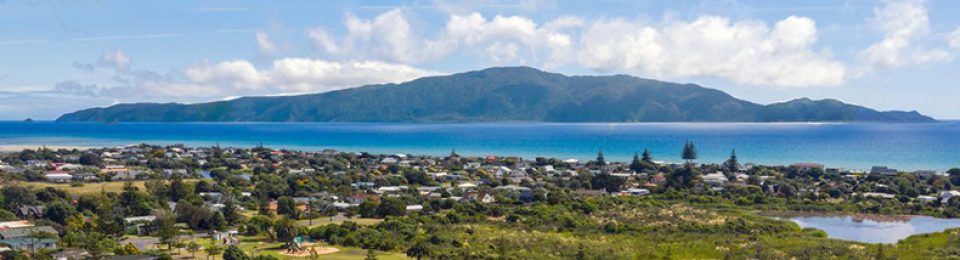
This was one of those on the Waikanae Lions garden trail in January.
31 Friday May 2024
Posted in Uncategorized

31 Friday May 2024
Posted in Uncategorized

by Brian Leyland on Bassett, Brash & Hide
On the morning of 19th May blackouts were averted only because New Zealanders made a patriotic effort to reduce demand. Prices went up rapidly and peaked at more than $3/kWh later in the day. This risky situation is likely to continue for a number of years.
The Electricity Authority has ignored it even though their objective is to “…achieve a sustainable, accessible, secure and resilient energy system to keep the lights on…”. Their website also says “Consumers’ best interests are at the heart of everything we do.” Perhaps they should be reminded that avoidable high prices, power restrictions and the threat of blackouts are not in the best interest of consumers.
Decisions made over the years have contributed to the crisis.
The first was to establish a market trading short term energy in the belief that “electricity is a commodity like any other”. It isn’t. It is the lifeblood of the economy and there is no alternative. They believed the market would provide an economic and reliable supply: it has produced expensive and unreliable electricity. No one is responsible for making sure the lights stay on. Somebody should be. Other problems are: consumers often pay carbon tax on hydropower; inducements to limit peak demand have largely disappeared; consumers pay the cost of backing up unpredictable wind and solar power. The Electricity Authority is keen on demand-side management while ignoring the contribution that could be made by better use of domestic water heaters for managing peak demand and stabilizing the system. Power prices have steadily increased and a 20% – 30% increase is likely as a result of the recent doubling in the wholesale price of electricity.
A major overhaul of the market is needed.
The crisis is exacerbated by the generally held belief that if New Zealand reduces emissions of carbon dioxide its climate will be better. This belief has led to carbon taxes, the promotion of wind and solar power, electric cars and the electrification of heating. All these have contributed to making electricity expensive and unreliable. The fact that China and India are building coal fired power stations flat out demonstrates that New Zealand cannot affect the world’s climate. We would be far better off diverting our resources to making sure that we can cope with an ever-changing climate.
The ban on gas exploration promoted by the Green Party is a continuing disaster because we finish up burning more coal. It has also reduced the number of drilling rigs in New Zealand. As a result it is now difficult to get one to drill new production wells on existing fields and for geothermal power. It will be very difficult to get the drillers back because they will be scared that the ban will return when the government changes. If they don’t come back, we will burn even more coal, import expensive liquefied natural gas and generate less geothermal power. Power prices and blackouts will increase.
What options does the new government have?
• End the ban on oil and gas exploration and do whatever is necessary to induce the drillers to come back. If we have a serious blackout it might be possible to persuade the Labour Party to promise that the ban will not be restored;
• Require wind and solar developers to contribute to the cost of providing the backup needed to keep the lights on when they are not producing;
• Investigate emissions-free and reliable nuclear power. The widely held belief that nuclear power is dangerous is not supported by the evidence. It is 100 times less dangerous than hydropower from large dams;
• Provide the aluminium smelter with a long-term contract on condition that it made a major contribution to managing peak demands and reducing energy demand during a dry year;
• Modernise hot water control using a smart thermostat that can control one water heater, a group of water heaters or all water heaters. It would bring huge benefits to the consumer by providing 10 times more energy storage than all the batteries in New Zealand. It can also contribute to reducing peak demands and helping to manage the frequency. The Electricity Authority is not interested.
• Set up a comprehensive, independent review of the electricity market. An electricity market fit for purpose would hold power prices and massively reduce the risk of blackouts.
• Investigate the proposition that it is better to stop squandering money on futile efforts to change the world’s climate and, instead, concentrate on defending ourselves against whatever an ever changing climate visits upon us.
There are probably several thousand MW of feasible and environmentally acceptable hydropower available. We should be looking at further hydro development, such as the already investigated schemes on the Waitaki, the Clutha and the West Coast. Regulating existing unregulated lakes over their natural range could bring considerable advantages with very little environmental effect.
Although the Lake Onslow debacle has shown that it is seriously expensive to store water for dry years, there is some potential for low-cost pumped storage that could help manage peak demands and wind and solar fluctuations.
If nothing is done poor people will be further disadvantaged and commerce and industry will be forced to install emergency diesel generators so they can stay in business during frequent blackouts and high prices. The economy will dive and New Zealand will become a third world country.
Bryan Leyland MSc, DistFEngNZ, FIMechE, FIEE(rtd) is a power systems engineer with 70 years experience all over the world
31 Friday May 2024
Posted in Uncategorized

31 Friday May 2024
Posted in Uncategorized
by Peter Imanuelsen
I have some news from Sweden that goes to show just how bad the situation actually is.
A new list from Numbeo has been ranking how safe and unsafe different cities in the world are.
The Swedish city of Malmö which has several no-go zones, is ranked as the number 76th most dangerous city in the entire world, listed right between Portland at number 75 and Tehran at number 77.
In fact, Malmö comes just a few spots after Baghdad in Iraq!
What is the most dangerous city in the world then you might wonder? That spot goes to Caracas, the capital of Venezuela – A Socialist country.
But Malmö is not the only Swedish city on the list. Stockholm is ranked at number 157 and Gothenburg at number 154.
However, other Nordic countries are much more peaceful. Oslo is ranked at number 244 and Helsinki in Finland is ranked at number 305.
But can you guess the most dangerous city in Europe? That would be Marseille at number 40, closely followed by Birmingham and Coventry in Britain.
Sweden used to be a very peaceful country. In fact, one of the most peaceful countries in the entire world.
31 Friday May 2024
Posted in Uncategorized
31 Friday May 2024
Posted in Uncategorized
A section of the $320 million floating pier built and erected off Gaza’s coast has broken off and floated onto an Israeli beach. The Saturday mishap is the latest setback for the US humanitarian aid project, after three US troops were reported injured aboard the pier two days prior, including one critically.
The Times of Israel‘s military correspondent Emanuel Fabian has reported that “An American vessel used to unload humanitarian aid from ships into the Gaza Strip via a floating pier disconnected from a small boat tugging it this morning due to stormy seas, leading it to get stuck on the coast of Ashdod, eyewitnesses say.”