Instead of another invasion, the current German threat to Poland is the hybrid warfare that’s actively waged against it through the German-led EU, the goal of which is to deracinate Poles and erode their country’s sovereignty in order to facilitate their subordination as post-modern German vassals.
Polish Prime Minister Donald Tusk wrote that “President Nawrocki has once again pointed to the West as the main threat to Poland. This is the essence of the dispute between the anti-European bloc (Nawrocki, Braun, Mentzen, PiS) and our Coalition. A deadly serious dispute, a dispute over our values, security, sovereignty. East or West.” This was in response to President Karol Nawrocki’s speech in Poznan in late December commemorating the Greater Poland Uprising that secured Poland’s interwar western borders.
Notes From Poland drew attention to how Nawrocki declared that “Poland is a ‘national community open to the west, but also a national community ready to defend the western border of the republic, as the Greater Poland insurgents knew.’…He also recalled how ‘aggressive’ efforts were made to ‘take away our culture and national heritage’. Just as Poles back then took action to defend their national identity, so today ‘we must do everything we can to ensure that Poland remains Poland.’”
In response to Tusk’s post, Nawrocki wondered whether he has grievances against those historical Polish figures who fought Germany in the past in an allusion to Tusk’s long-suspected German loyalties. He also suggested that he’s either “unable to listen with understanding, or deliberately seeks conflict because his budget, healthcare, etc., aren’t adding up.” Nawrocki ended by reminding Tusk of his close ties with Putin during the golden era of Russian-EU relations, which remain controversial inside Poland to this day.
Analyzing this exchange, Nawrocki’s innuendo that the German-led EU poses a similar threat to Polish identity as the Imperial-era “Kulturkampf” upset Tusk, who then twisted his words and the context within which they were said to provoke a faux scandal for deflecting from his domestic political failures. Nawrocki wasn’t implying that Germany still poses the same threat to Poland’s territorial integrity as its predecessor states did, but he was nevertheless reaffirming that it’s still indeed a threat of some sort.
It was recently explained that “Germany Poses A Significant Non-Military Threat To Polish Sovereignty”, namely through its de facto control of the EU and associated attempts to erode Polish sovereignty, which also aim to weaken its national identity and thus amount to a modern-day “Kulturkampf”. This threat perception, which is shared among many on the Polish Right, compelled Nawrocki to devise a detailed plan for reforming the EU. He unveiled it during a speech in late November that can be read here.
Most media ignored this, but it contextualizes the part of his speech about “defend[ing] the western border of the republic” from threats from that direction, ergo why he said that “we must do everything we can to ensure that Poland remains Poland.” He also mentioned Imperial Germany’s plot to engineer demographic change, the policy of which continues through the German-led EU’s demands for Poland to accept civilizationally dissimilar migrants, including by literally dumping some of them into Poland.
Accordingly, Nawrocki therefore wasn’t fearmongering about German revanchism like Tusk claimed but was strongly alluding to the threats that Poland still faces from the west, they’re just much less kinetic nowadays. Instead of another invasion, they take the form of the hybrid warfare that Germany actively wages against Poland through the German-led EU, the goal of which is to deracinate Poles and erode their country’s sovereignty in order to facilitate their subordination as post-modern German vassals.
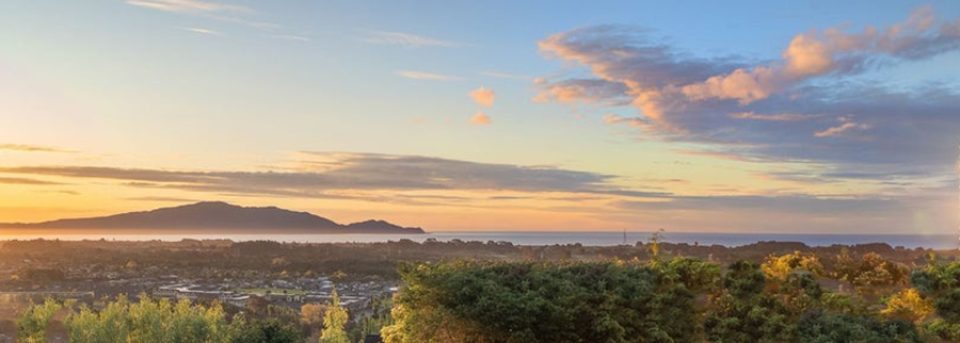
We saw this on Peka Peka beach yesterday. It seems the young guys had gone out fishing in the speedboat and upon returning found their towing car had sunk into the wet sand with the tide lapping around it. We witnessed a ute show up, but which had no success in shifting it. We didn’t stay to see what happened next.
Donald Trump’s attempt to rebuild the US industrial base by using tariffs is failing and is accelerating the development of the BRICS nations into an alternative financial infrastructure that is not dependent on the US dollar as a reserve currency. The price of gold and silver has exploded to historic levels during the past two weeks. But this move did not just start in 2026… Central banks globally bought record amounts of gold in 2025 (~1,000+ tons), with India and China leading the charge as they sell Treasuries. This diversification is explicit: Nations are replacing dollar assets with precious metals to mitigate risks from US debt levels ($38.5 trillion) and potential sanctions/tariffs. Silver, while less central to reserves, has seen increased sovereign interest amid its industrial demand surge (e.g., in solar/EVs). This trend signals concerns over the “end of US dollar dominance” and a pivot to commodities.
The surge in gold and silver prices to record nominal highs in January 2026—gold exceeding $5,000 per ounce and silver surpassing $110 per ounce—does not literally represent levels unseen in the past 300 years when adjusted for inflation. Historical data shows gold reached inflation-adjusted peaks around $3,000–$4,000 per ounce in the early 1980s (during geopolitical crises and high inflation), and silver hit real highs of over $150 per ounce in 1980. However, the current rally is driven by a confluence of factors making these metals exceptionally attractive:
Geopolitical Uncertainty and Safe-Haven Demand: Escalating global tensions (e.g., U.S. tariff threats on allies like Canada/Mexico/China, ongoing wars in Ukraine and the Middle East) have boosted gold as a hedge against instability. Central banks (especially in China, India, and Russia) accumulated record gold reserves in 2025–2026, with purchases exceeding 1,000 tons annually. Silver benefits similarly but also from its industrial role.
Industrial and Green Energy Demand: Silver’s use in solar panels, EVs, electronics, and semiconductors has driven consumption to record 680 million ounces in 2025, creating persistent supply deficits (mine output lags demand by 150–200 million ounces annually). Gold demand from ETFs and investors surged amid U.S. shutdown fears and tariffs.
Economic Factors: U.S. policy uncertainty (tariffs up to 100% threatened by Trump), global oversupply concerns, and a weakening dollar have fueled the rally. Analysts predict gold could hit $6,000 and silver $125–$300 by end-2026 if trends continue.
And then there is the BRICS-effect... There is substantial evidence that several nations—particularly emerging economies like China, India, and Brazil—have been selling off portions of their US Treasury bill holdings in recent years (including 2025–2026) and reallocating some of those funds into physical gold and silver reserves. This trend is driven by a combination of geopolitical risks (e.g., US tariffs and sanctions), a desire for diversification away from dollar-denominated assets, inflationary pressures, and the appeal of precious metals as safe-haven stores of value amid global uncertainty. While not all nations are doing this uniformly (e.g., some European investors increased Treasury holdings in 2025), the pattern is clear among key BRICS members and central banks, as detailed in recent reports and data.
China and India are Leading the Trend: In recent months (through late 2025 and early 2026), China and India have significantly reduced their US Treasury holdings. China, the second-largest foreign holder (after Japan), has sold off billions in Treasuries amid escalating US tariffs (up to 100% threatened by the Trump administration) and a push for de-dollarization. India has followed suit, trimming its holdings while ramping up gold purchases. This is part of a broader “global gold rush” where these nations are dumping Treasuries to hedge against US policy volatility.
Brazil has also reduced its Treasury exposure in the past three years, aligning with a coordinated BRICS strategy to lessen reliance on the US dollar. This includes selling Treasuries and increasing gold reserves as a buffer against potential US economic pressures. Other foreign investors also accelerated sales of US debt in 2025, contributing to gold’s surge past $4,800 per ounce. For instance, Denmark sold $100 million in Treasuries in a move signaling broader repatriation risks. Japan may follow with capital repatriation, potentially selling more Treasuries amid rising US yields. However, not all are selling—European buyers piled into Treasuries in 2025 (accounting for 80% of foreign inflows from April–November), showing a mixed global picture.
It is that last fact that is a head scratcher… Because the US Treasury is having more trouble finding foreign buyers for US debt, you would think that the US would want to avoid antagonizing European buyers. Well, you thought wrong. Trump’s imperial antics regarding Greenland have roiled US relations with Europe and with NATO. Do you think that the previous European buyers of T-bills are now motivated to buy more? Or has Donald Trump’s unpredictable, abrasive threats created incentives for those nations to sell their T-bills and buy gold and silver? We will see.
Now for a seemingly unrelated question… Will the volatility in the commodities markets for gold and silver affect Donald Trump’s decision to launch a new attack on Iran? If the US decides to attack Iran I think there is a high probability that Iran will shutdown the Strait of Hormuz, which would disrupt 45% of the world’s daily oil supply. That would trigger an immediate surge in the price of oil and would likely create major economic problems for those nations dependent on oil flowing out of the Persian Gulf.
The dampening effect on the economies of major importers of Persian Gulf oil could be mitigated by the amount of strategic reserves that the affected countries have. High-dependency countries (e.g., China, India, Japan, South Korea—importing 50–90%+ of oil from Gulf) could maintain supplies for 30–60 days using existing stockpiles and enacting emergency measures. A prolonged closure (beyond 60 days) would strain just-in-time inventories and cause severe shortages.
I did two podcasts today — the first with Marcello (i.e., Press of Mass Destruction) and Rasheed Mohammad (I.e., TheRedPill Diaries):
A new $230-million movie and television studio in downtown Los Angeles has no customers as a prolonged slowdown is reshaping the industry’s economics and hitting independent studios hardest.
With fewer projects and rising costs, owners and workers are making tough choices to stay afloat while waiting for a recovery that’s been slow to arrive.
And not only small studios are losing independence: Netflix has agreed to buy Warner Bros. Discovery’s studio and streaming business in an all-cash deal for $US 27.75 a share. Warner Bros.′ board has unanimously approved the deal and its shareholders will vote on it in the next couple of months. The disappointing aspect here is that Netflix is known for Wokeism.
Border Czar Tom Homan grabs the Minnesota-shaped shovel and starts digging out the corruption—shoveling Walz, Frey, and Omar straight into the snowbank!
No more sanctuary slush, just clean streets and accountability.
Nick Shirley exposed the billions in Somali fraud, and shortly thereafter Minnesota exploded with mass protests. Are the constant protests an arranged distraction from the vast Minnesota fraud by carried out by Walz, Omar, and other Democrats in Minnesota?
Homan is there to clean up the streets of Minnesota. He will deport illegal aliens and put criminal aliens in jail. Don’t listen to what the Democrats are shoveling.
Don Brash was Leader of the National Party at the time.
Ladies and gentlemen,
This is the second occasion on which I have addressed your Club on the last Tuesday of January, and I very much appreciate your invitation.
Soon after becoming leader of the National Party, I outlined my five main priorities.
First, we must, as a country, take vigorous steps to counter the long-standing relative decline in New Zealand incomes, which sees our per capita incomes now around $180 lower per week – or about $9,000 per year – than those enjoyed by Australians. The Labour Government is doing nothing to bridge this gap, but is instead erecting barriers to faster growth at almost every turn.
Second, we must deal with the fact that too many of our children leave school massively handicapped by illiteracy and innumeracy. Today’s education system is failing many of our children, particularly the least privileged. If education is the passport to a better future, too many of our children currently have no chance of getting there. The Labour Government is failing to deal with this issue, and has made things worse by removing the elements of parental choice which the National Governments of the nineties introduced.
Third, we have to face the reality that traditional kiwi values are being destroyed by a government-funded culture of welfare dependency. National will stop communities wasting away on welfare. Sitting at home on welfare should never be an option, as the Labour Government seems to believe.
Fourth, we must deal with the issues of security, and especially the current half-hearted attitude towards enforcing the law in New Zealand. Under a National Government, when people step over the line which marks the boundary between honest and criminal activity, between civilised behaviour and that which preys on the community, they will be punished. Labour, by contrast, appears to be much more concerned with the rights of the criminal than with those of the victim.
And fifth, the topic I will focus on today, is the dangerous drift towards racial separatism in New Zealand, and the development of the now entrenched Treaty grievance industry. We are one country with many peoples, not simply a society of Pakeha and Maori where the minority has a birthright to the upper hand, as the Labour Government seems to believe.
Over the next few months, I plan to give a major speech on each of my five main priorities, but today I want to speak about the threat which “the Treaty process” poses to the future of our country. I am focussing on this topic because, just before Christmas, after Parliament had risen for the year, the Government announced its foreshore and seabed policy, a policy with potentially huge significance for the future of our country.
So let me begin by asking, what sort of nation do we want to build?
Is it to be a modern democratic society, embodying the essential notion of one rule for all in a single nation state?
Or is it the racially divided nation, with two sets of laws, and two standards of citizenship, that the present Labour Government is moving us steadily towards?
But the spirit of the Treaty of Waitangi was expressed simply by then Lt-Gov Hobson in February 1840. In his halting Maori, he said to each chief as he signed: He iwi tahi tatou. We are one people.
A number of issues flow from this. They are complex, highly sensitive, even emotionally charged.
But I believe in plain speaking. So let me be blunt.
Over the last 20 years, the Treaty has been wrenched out of its 1840s context and become the plaything of those who would divide New Zealanders from one another, not unite us.
In parallel with the Treaty process and the associated grievance industry, there has been a divisive trend to embody racial distinctions into large parts of our legislation, extending recently to local body politics. In both education and healthcare, government funding is now influenced not just by need – as it should be – but also by the ethnicity of the recipient.
The Nelson-Tasman Primary Health Organisation is a good example: PHOs are explicitly established on a racial basis, and the Nelson-Tasman PHO is required to have half of the community representatives on its board representing local iwi, even though the number of people actually belonging to those local iwi is a tiny fraction of the population covered by that PHO.
Much of the non-Maori tolerance for the Treaty settlement process – where people who weren’t around in the 19th century pay compensation to the part-descendants of those who were – is based on a perception of relative Maori poverty. But in fact Maori income distribution is not very different from Pakeha income distribution, as sociologist Simon Chapple pointed out a couple of years ago in a much publicised piece of research.
Maori-ness explains very little about how well one does in life. Ethnicity does not determine one’s destiny.
It is the bottom 25% of Maori, most of them on welfare, who are conspicuously poor. They are no different to Pacific Islanders or other non-Maori on welfare; it’s just that there is a higher percentage of them in that category.
The myths of our past
Let me now counter some of the myths of our past. Too many of us look back through utopian glasses, imagining the Polynesian past as a genteel world of “wise ecologists, mystical sages, gifted artists, heroic navigators and pacifists who wouldn’t hurt a fly”.
It was nothing like that. Life was hard, brutal and short.
James Belich shows us that, once guns fell into Maori hands in the early years of the 19th century, ancient tribal rivalries saw Maori kill more of their own than the number of all New Zealanders lost in World War I. Probably 20,000 Maori were killed by Maori in the 1820s and 1830s.
Equally, however, the initial Maori contact with Europeans was hardly a contact with the cream of European civilisation. The first Europeans that Maori encountered were explorers, whalers, escaped convicts from Australia, and then settlers hungry for land to build a new life. Many were none-too concerned about the niceties of the Treaty. And none possessed any appreciation of the interpretations of its meaning that some are trying to breathe into the document today.
Any dispassionate look at our history shows that self-interest and greed featured large on both sides. Pakeha tried hard to separate Maori from their lands, and usually succeeded, although at various points the Crown endeavoured to ensure that proper procedures, consistent with the Article 2 guarantee to Maori that they were able to sell freely and fairly, were upheld.
Yet in spite of these problems, and in spite of all the turmoil, the shocks from the collision of two cultures and the chaos of unprecedented social change, the documentary evidence clearly shows that Maori society was immensely adaptable, and very open to new ways. That adaptability and resourcefulness, that openness to opportunity, that entrepreneurial spirit, is something that survived the trauma of colonisation, and is today reflected in a Maori renaissance across a wide range of business, cultural and sporting activity.
We should celebrate the fact that, despite a war between the races in the 1860s and the speed with which Maori were separated from much of their land – partly through settler greed, partly through a couple of generations of deficient leadership by some Maori – our Treaty is probably the only example in the world of any such treaty surviving rifle shots. Those who said a hundred years later that New Zealand possessed good race relations by world standards weren’t wrong. While we try to fix the wrongs of the past, we should celebrate the good things and shared experiences that underpin our nationhood.
All Maori got the right to vote, and had it long before 1900. By the 1930s, they possessed equal rights of access to state assistance, be it pensions or subsidised housing loans or access to education. One standard of citizenship was gradually working, and the gaps that existed in every other colonial country were closing here as Maori took advantage of full employment.
Although he listed a number of land grievances in his centennial speech at Waitangi on 6 February 1940, Sir Apirana Ngata told those present that in the whole world it was unlikely that any “native” race had been as well treated by settlers as Maori.
Let me be quite clear. Many things happened to the Maori people that should not have happened. There were injustices, and the Treaty process is an attempt to acknowledge that, and to make a gesture at recompense. But it is only that. It can be no more than that.
None of us was around at the time of the New Zealand wars. None of us had anything to do with the confiscations. There is a limit to how much any generation can apologise for the sins of its great grandparents.
There are a few radicals who claim that sovereignty never properly passed from Maori into the hands of the Crown, and thus ultimately into the hands of all New Zealanders, Maori and non-Maori. They are living in a fantasy world. These claims come from the more radical Maori end of the spectrum. They can be seen for what they really are: a negotiating position.
What worries me about the current Treaty debate is that we find ourselves now, at the beginning of the 21st century, still locked into 19th century arguments.
Too many Maori leaders are looking backwards rather than towards the future. Too many have been encouraged by successive governments to adopt grievance mode.
The Treaty process
I want, now, to briefly review the more recent history of the Treaty process.
We have moved from a badly drafted and ambiguous Treaty document of 1840 , through a long period of colonisation to an attempt to live by the simple principles that seem to underlie that document.
In 1975, the Waitangi Tribunal was established to hear Maori grievances about contemporary problems. The powers of the Tribunal were greatly extended in 1985. In a fateful decision, it was given authority to cover claims going back as far as the 1840 Treaty itself – this despite the fact that “full and final” settlements had been made with Tainui, Ngai Tahu and others, decades before.
A poorly drafted Act in 1985, coupled with inadequate attention to its implementation, allowed a major grievance industry to blossom.
Only a year later, in the State-Owned Enterprises Act 1986, the Government, not foreseeing the consequences of its decisions, made a last minute amendment to the Act. It read into the bill under urgency, without any reference back to a Select Committee, a revised section 9, which stated that “Nothing in this Act shall permit the Crown to act in a manner that is inconsistent with the principles of the Treaty of Waitangi”.
Whether intended or not, Parliament had created a new concept – the “principles of the Treaty”. But these principles were never defined – nobody had a clue what they might be. In the end, it was left to un-elected Court of Appeal judges to determine an interpretation of the Treaty’s meaning that the politicians most certainly never intended.
Thus, an accident of litigation, which related to a specific provision in a piece of economic legislation, and the Court’s attempt to make that legislation work without adequate guidance from Parliament, ended up by providing a basis for building an entire constitutional relationship between Crown and Maori.
Since 1987, and especially since 1999 when the current Labour Government took office, governments have included references to the “principles of the Treaty” in legislation, still without defining them. Even the Cabinet Manual now states that Ministers must specify whether proposed bills comply with “the principles of the Treaty”. It doesn’t define those principles either.
In 1988, there was another development of great significance. The Government’s decision to sell off some of the state forests resulted in a judicial ruling that the Crown could not do so until ownership of the land beneath the trees had been determined by the Waitangi Tribunal process. To speed up what was becoming a much more drawn out process than had been envisaged in 1985, ministers came up with the idea of a Crown Forest Rental Trust that would receive the cutting fees as the forests were managed, and use the money to speed the hearing process about the land under the trees.
Far from speeding the process, it quickly slowed down. As one commentator has observed: “A growing number of bees – some busy, others drones – swarmed around this new, lucrative [Crown Forest Rental Trust] honey pot.” The troubles surrounding this particular honey pot continue to this day, and only very belatedly, and after a lot of very adverse publicity, is the current Government moving to clean up the Crown Forest Rental Trust process.
The biggest problem we face with the Treaty process is a lack of leadership. For 20 years now, mischievous minds have been interpreting the document in ways that they envisage will suit their financial purposes. We need proper leadership on the issue, and the next National Government will provide it.
One principle above all others guides my thinking: The Treaty of Waitangi should not be used as the basis for giving greater civil, political or democratic rights to any particular ethnic group.
The direction in which the current Government is heading is fundamentally different and it is wrong. For the sake of our future, it must be changed.
Treaty references in legislation
As I’ve noted, there is now a wide range of legislation making reference to the “principles of the Treaty” without any definition of what that means – including the Environment Act 1986, the Conservation Act 1987, the Education Act 1989, the Resource Management Act 1991, the Crown Research Institutes Act 1992, the Arts Council of NZ Toi Aotearoa Act 1994, and the Hazardous Substances and New Organisms Act 1996.
The only conclusion we can reach is that successive governments have believed that this 19th century treaty has something to say about today’s SOEs and national parks, today’s schools and universities, how we go about approving or declining building permits, what science we should study, what art we should look at, and even how we should regard the new frontier of genetic science!
Well, it doesn’t.
Local government now also has statutory obligations with respect to the undefined principles of the Treaty. The anachronism of the Parliamentary Maori seats (created as a temporary device in 1867 when tribally-organised, rurally-based Maori still formed the bulk of the Maori population) is now being extended by Labour to include local government. Some local authorities are introducing Maori wards without regard to whether the guiding democratic principle of “one person, one vote, one value” is violated.
The Local Government Act also requires local authorities to set up special consultation with Maori, over and above the extensive consultation already required with local communities, as if somehow Maori are not part of local communities. As a result, iwi are developing a central role with respect to local government. They possess the power to veto many development projects, projects which could provide us all with jobs.
Where does this all stop? And what group is driving this process?
As one commentator observed recently, a number of non-Maori radicals, having climbed high into our social hierarchy, wield considerable political, economic and judicial influence, and now “constitute a powerful fifth column in the Maori cause.”
It is bizarre that, in a society where the Prime Minister refuses to allow grace to be said at a state banquet, because, she says, we are an increasingly secular society, we fly Maori elders around the world to lift tapu and expel evil spirits from New Zealand embassies; we allow courts to become entangled in hearings about the risks to taniwha of a new road or building; we refuse to undertake potentially life-saving earthworks on Mount Ruapehu lest we interfere with the spirit of the mountain; and we allow our environment law to be turned into an opportunistic farce by allowing metaphysical and spiritual considerations to be taken into account in the decision process. It is a farce that could all too quickly turn to tragedy.
Spiritual beliefs are important in any society. They should be respected. They should never be mocked. But personal spiritual beliefs should not be allowed to drive our development as a modern society.
I am sure most Maori are as embarrassed by the present situation as most non-Maori are astounded. We are becoming a society that allows people to invent or rediscover beliefs for pecuniary gain. This process is becoming deeply corrupt, with some requirements for consultation resulting in substantial payments in a system that looks like nothing other than stand-over tactics.
These are crucial issues for the future of our nation. Unless they are dealt with properly, they will ultimately undermine the very essence of what it means to be a New Zealander.
Chris Trotter – who writes in the Dominion-Post in Wellington, and The Independent nationally – is not known for his sympathy for the National Party. He writes unashamedly from the political left, but what he writes is intellectually honest and always arresting. He recently asked:
“Shall New Zealand go forward into a new century as a modern, democratic and prosperous nation; or shall it become a culturally divided, economically stagnant and aristocratically misgoverned Pacific backwater, like the Kingdom of Tonga or the Republic of Fiji?”
He asked that question presumably because he thinks, as I do, that under the present Government, the answer is the latter. We’re going downhill.
The foreshore proposals
Now to a current problem that gets to the heart of today’s mismanagement of Treaty relations. Just after the closing of Parliament last year, when MPs couldn’t debate the issue, the Government released its proposals for dealing with the foreshore and seabed following a legal decision that overturned 125 years of settled law.
The simple option was to legislate to establish the Crown ownership that almost everyone believed already existed. Instead, the Government has come up with a convoluted notion called “public domain”. On the face of it, it sounds good. But it leaves room for much more than just limited recognition of “customary rights”, and in fact embodies vast powers, including the right to a Maori veto.
First, Government documents make it clear that the proposed “customary title” will allow the development of commercial activity arising from customary use. This “development right” will mean an expansion of traditional customary rights.
Secondly, along with commercial development, customary title also gives Maori a veto power over anyone else’s development, whether commercial or recreational. As I read the papers released by the Government, anyone wanting to build a small jetty on a coastal property where customary title has been established will need iwi consent. And what we know from experience is that this is likely to require a substantial payment to smooth the path for consent.
Thirdly, Maori also gain a new role in the management of the entire coastline. Customary title will give commercial development rights, which over time will inevitably erode public access. In addition, 16 newly-created bureaucracies will give Maori a more dominant role than other New Zealanders in the use and development of the coastline, not only where customary title is granted, but elsewhere as well. All these committees will be taxpayer-funded. Maori will gain access to even more taxpayers’ funds for consultants, lawyers and hui to “build capacity” to take part in this process.
It is not hard to envisage what is going to happen.
The additional costs in any development process will make a small number of people much better off, but will make all other New Zealanders, including most Maori, worse off, by slowing, and in many cases blocking entirely, the potential for development of our resources, especially aquaculture.
There are massive conflicts of interest in all of this, and they will inevitably invite corruption. Under the proposals, Maori can now be owners, managers and regulators, all at the same time, thereby ensuring their own developments can succeed. They can block others if they can show to sympathetic authorities that their customary right is adversely affected. It is astonishing that the Government could establish such a conflict-ridden model. It is an absolute recipe for disaster.
A multi-cultural melting pot
Let me turn briefly to what we mean by “Maori”.
The short cut of referring to Maori as one group and Pakeha as another is enormously misleading . There is no homogenous, distinct Maori population – we have been a melting pot since the 19th century – although there is, of course, a highly distinctive Maori culture, which many people see as central to their identity.
Our definition of ethnicity is now a matter of subjective self-definition: if you are part Maori and want to identify as Maori you can do so.
The Maori ethnic group is a very loose one. There has always been considerable intermarriage between Maori and Pakeha. Anthropologists tell us that by 1900 there were no full-blooded Maori left in the South Island. By 2000, the same was true of the North Island. Today, nearly 70% of 24 to 34 year old New Zealanders who identify as Maori are married to someone who does not.
And most of the rest are themselves of multi-ethnic identity, itself a consequence of two centuries of intermarriage. As a consequence, a majority of Maori children grow up today with a non-Maori parent.
Many people feel it is somehow impolite to mention these facts. But by ignoring them we create an oppositional picture of race relations in this country, and we overlook the many powerful forces that can promote social cohesion.
What we are seeing is the emergence of a population in New Zealand of multi-ethnic heritage – a distinct South Seas race of New Zealanders – where more and more of us will have a diverse ancestry. Hopefully, we will get joy and pride from all the different elements that go to make us who we are.
My own family is racially mixed. My 10-year-old gains both from his New Zealand-European and from his Singaporean-Chinese heritage.
There is plenty of evidence that most New Zealanders are happy to see New Zealand develop in this way. In spite of the heightened rhetoric from the publicists of ethnic difference, most people treat their ethnic allegiances fluidly. For many people, aspects other than their ethnicity matter much more to them – their religion, their profession, their sports club, their gender, and their political allegiance.
What do I conclude from all this?
First, we need to look at our past honestly, not through a lens which projects current values onto 19th century New Zealand, and not by stripping away the context of the past.
The Treaty contains just three short clauses, and deals with the government of New Zealand, property rights, and citizenship. Those principles must be upheld. Where there has been a clear breach of the Treaty – where land has been stolen, for example – then it is right that attempts to make amends should be made.
But the Treaty is not some magical, mystical, document. Lurking behind its words is not a blueprint for building a modern, prosperous, New Zealand. The Treaty did not create a partnership: fundamentally, it was the launching pad for the creation of one sovereign nation.
We should not use the Treaty as a basis for creating greater civil, political or democratic rights for Maori than for any other New Zealander. In the 21st century, it is unconscionable for us to be taking that separatist path, and this Labour Government deserves to be defeated on that basis alone.
The National Party has an honourable record of resolving historical Treaty grievances. Virtually all of the major financial settlements achieved to date occurred under National in the 1990s. They included settlements for the Fisheries ($150 million), Tainui ($170 million) and Ngai Tahu ($170 million). The leadership shown by Prime Minister Jim Bolger and Treaty Negotiations Minister Sir Douglas Graham was crucial in establishing a national consensus on the need to resolve historical grievances as part of the process of reconciliation.
The settlement process has slowed considerably since Labour took office, with claims resolution bogged down due to lack of leadership and commitment.
Let me make it quite clear. National is absolutely committed to completing the settlement of historical grievances. We will ensure that the process is accelerated and brought to a conclusion. It must then be wound up. It is essential to put this behind us if all of us – and Maori in particular – are to stop looking backward and start moving forward into this new century as a modern, democratic and prosperous nation.
We intend to remove divisive race-based features from legislation. The “principles of the Treaty” – never clearly defined yet ever expanding – are the thin end of a wedge leading to a racially divided state and we want no part of that. There can be no basis for special privileges for any race, no basis for government funding based on race, no basis for introducing Maori wards in local authority elections, and no obligation for local governments to consult Maori in preference to other New Zealanders.
We will remove the anachronism of the Maori seats in Parliament.
We will deal with the foreshore issue by legislating to return to the previous status quo – the settled legal situation before the Court of Appeal decision. That is a position where for the most part the Crown owned the foreshore. In so far as there was uncertainty about the situation before, we will clarify the position. Public ownership leaves room for recognising limited customary rights, but we will not allow customary title. If this Government issues such title, we will revoke it.
Having done all that, we really will be one people – as Hobson declared us to be in 1840.
I acknowledge that there are problems of Maori socio-economic disparity in some places, mostly rural. We will focus our welfare reform efforts on those areas. We will not have entire townships, and some suburbs, on the dole.
Welfare recipients will be offered retraining, and offered some activity by which they can earn, and be seen to earn, their welfare cheque. Their children will see their parents constructively engaged in the community each day, not marginalised by it. That, more than anything, will restore their dignity.
But these are not Treaty issues: they are social welfare issues, and Maori New Zealanders who are in need are as entitled to assistance as any other New Zealanders who are in need.
Similarly, a National Government will continue to fund Te Kohanga Reo, Kaupapa Maori, Wananga and Maori primary health providers – not because we have been conned into believing that that is somehow a special right enjoyed by Maori under the Treaty, but rather because National believes that all New Zealanders have a right to choice in education and health.
Finally, we ask Maori to take some responsibility themselves for what is happening in their own communities. Citizenship brings obligations as well as rights. The Maori translation of Article 3 was very clear about that. We all have an obligation to make the effort to build a culture of aspiration – as the great Maori leaders of the past, and indeed some of the Maori leaders of the present, have advocated – not a culture of grievance. Like everybody else, Maori must build their own future with their own hands.
Most are doing that already, and it is crucially important that government policy encourages this, not discourages it.
The spirit evident in the Maori response to the new opportunities that emerged in the mid-19th century is alive and well today. It is displayed in the outstanding performance of Maori in fishing and other primary sectors, and in a range of entrepreneurial business, sporting and cultural activities.
Their efforts, their aspirations, and their focus are light-years away from the handout mentality being fostered by this Government.
A culture of dependence and grievance can only be hugely destructive of the Maori people and, if left unchecked, destructive of our ability to build a prosperous nation of one people, living under one set of laws.
Let me make one final concluding comment.
In many ways, I am deeply saddened to have to make a speech about issues of race. In this country, it should not matter what colour you are, or what your ethnic origin might be. It should not matter whether you have migrated to this country and only recently become a citizen, or whether your ancestors arrived two, five, 10 or 20 generations ago.
The indigenous culture of New Zealand will always have a special place in our emerging culture, and will be cherished for that reason.
But we must build a modern, prosperous, democratic nation based on one rule for all. We cannot allow the loose threads of 19th century law and custom to unravel our attempts at nation-building in the 21st century.
With old Gaza in ruins this is a US-backed reconstruction and redevelopment plan. Vladimir Putin, Viktor Orban and Mohammed bin Salman have all joined the board or expressed a desire to do so. Turkey’s Recep Tayyip Erdoğan, Belarusian President Alexander Lukashenko and Israel’s Benjamin Netanyahu are also reported to be doing so.
Needless to say, the Palestinians won’t be invited to make any significant input — they’re probably going to be sent to Somaliland.
NZ is reported to be considering participation, but the $1 billion price tag sounds like a big waste of money.