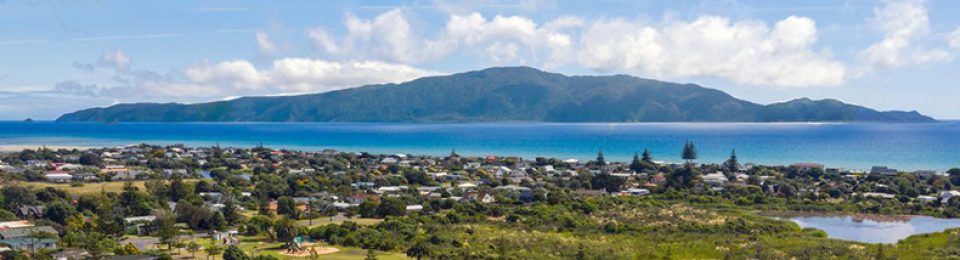
view of the Waimanu Lagoon north pond
29 Thursday Aug 2024
Posted in Uncategorized

29 Thursday Aug 2024
Posted in Uncategorized
29 Thursday Aug 2024
Posted in Uncategorized

The 2024 election’s latest political tsunami unfolded on Friday when Robert Kennedy Jr. halted his presidential campaign and endorsed Donald Trump.
RFK’s own run at the White House was the most serious third-party bid in recent memory, and its suspension could ultimately tip the scales in Trump’s favor.
So why did he do it?
Kennedy joined today’s Tucker Carlson Show to explain his consequential decision and discuss the Democratic Party’s assault on democracy, connecting with the divine, Pavel Durov’s arrest, and more. Click the image to watch.
Robert Kennedy Jr. tells Tucker:
“What does the rest of the world think of American democracy right now? We have, in one party, selected a man with dementia to lead the free world and then turned around and picked a person, a woman, who cannot give an interview. She cannot defend her vision.”
29 Thursday Aug 2024
Posted in Uncategorized
Yes, C. Hipkins who strangely after leading his party to a massive defeat last October, is still there.
from Hobson’s Pledge

This week, Labour Party leader Chris Hipkins has stirred controversy by asserting that “Māori did not cede sovereignty” when signing the Treaty of Waitangi. According to the New Zealand Herald, Hipkins was “unequivocal” in this claim.
Hipkins stated: “It’s pretty clear that if you follow the various court rulings over time, the academic research, and the Treaty settlement process, the answer is no.” He further clarified, “That doesn’t mean the Crown doesn’t have sovereignty now, but Māori didn’t cede sovereignty in signing the Treaty.”
Such statements from a major political leader are deeply concerning and irresponsible. How can Hipkins claim Māori didn’t cede sovereignty while also acknowledging the Crown’s current sovereignty? This contradictory stance raises serious questions about his understanding of New Zealand’s history and constitutional framework.
FACT CHECK Article One of the Treaty states: “The Chiefs of the Confederation of the United Tribes of New Zealand and the separate and independent Chiefs who have not become members of the Confederation cede to Her Majesty the Queen of England absolutely and without reservation all the rights and powers of Sovereignty…”The intent of the Treaty was to unify New Zealand under a single sovereign authority.
Historical records, including speeches by Māori chiefs in 1840 and at the Kohimarama conference in 1860, confirm that they understood that they were surrendering authority to the Crown.Sir Apirana Ngata, perhaps the greatest Maori leader of all time, emphasised this a century ago:
“Clause 1 of the Treaty handed over the mana and the sovereignty of New Zealand to Queen Victoria and her descendants forever.
”New Zealand has operated as a unified nation under the Crown’s sovereignty for more than 180 years.
Hipkins’ claim that Māori did not cede sovereignty threatens our national unity and could undermine our legal and political system, creating divisions based on heritage where there should be none.
Former Labour Prime Minister David Lange observed: “Democratic government can accommodate Māori political aspirations in many ways… What it cannot do is acknowledge the existence of a separate sovereignty. As soon as it does that, it isn’t a democracy.”
Willie Jackson has dismissed the notion that Maori chiefs ceded sovereignty in 1840 as “laughable,” further fuelling division and confusion. In contrast, National Party leader Christopher Luxon, Deputy Prime Minister Winston Peters and David Seymour — the leaders of all the parties in the Coalition Government — have reaffirmed the Crown’s sovereignty.
Disagreements about New Zealand’s founding document should concern us all.
It’s time to stand firm on the principles that unite us as New Zealanders—one law for all, under one sovereign authority.
Sincerely,
Don Brash, Trustee
29 Thursday Aug 2024
Posted in Uncategorized
Not a lot really. they both want ‘mahney’ for illusory promises.

Pay more of it to the government to make the weather better.

Not only lots of tax, but some of their plans are scary:

All that is part of the WEF/UN Agenda 2030 of course.
29 Thursday Aug 2024
Posted in Uncategorized
It will be remembered that Ewy in Poland is 17,481 km from Waikanae: if a Metlink bus was going to Nis in Serbia, it would be an even longer journey, although not by a lot:


28 Wednesday Aug 2024
Posted in Uncategorized
by Geoffrey Churchman
Today being the first day since Sunday when there hasn’t been an abundance of Dougherty’s precious water from the sky (remember his signs proclaiming, ‘our water is precious’ that he plonked around Kapiti at the time of the water meters about 10 years ago?), I went to inspect the ‘Transport Hub’ which is finally in operation at Paraparaumu Station.

The view from the Kapiti Road entrance. (‘NIS’ doesn’t mean the bus is going to Nis in Serbia, but ‘Not in Service.’)

The 2 x $1 million bus shelters seen about 50 metres from the entrance. They have steel frames to cope with the weight of the ‘organic’ roofs. But $1 million each? The two pohutukawa trees that the Paraparaumu Community Board saved can be seen.

The $2 million blurb on a window.
And where has the rest of the $18 million total cost gone? This?

Hmm. ‘Underwhelming’ would be an understatement.
By way of comparison, here’s a pic I took in April of the downtown train station plaza of San Diego.

28 Wednesday Aug 2024
Posted in Uncategorized
Maybe in Narnia too?
28 Wednesday Aug 2024
Posted in Uncategorized

28 Wednesday Aug 2024
Posted in Uncategorized

“I’ve got a new painting that’s now up for auction titled ‘I’m Speaking’, commemorating the vice president’s use of those words to shut down anti-genocide protesters earlier this month.” Bidding is here.
28 Wednesday Aug 2024
Posted in Uncategorized
By Tony Orman

A book of memoirs – genuine and realistic
The subtitle — cracking yarns and tall tales from the bush — implies perhaps that this book is a “gung-ho” tale of hunting yarns akin to the style of Barry Crump’s Good Keen Man. However, that is a false impression. Instead, it is a book of memoirs from the author’s first deer through his development in the teenage years under respected tuition to adulthood and then to parenthood.
The endeavors both with hunting and in his personal life are told with candor, sensitivity and in an engaging style which together make the book a delight to read. The tales are not “tall’ but genuine and realistic in the narration.
In a few words, this has to be one of the best hunting books I’ve read in a long time.
The author Sam Gibson will be well known to readers of the New Zealand Outdoor magazine as his column, test reports and articles regularly feature. I’m not sure on the sub-title of “tall tales” because the author comes across as very authentic and genuine,

Sam is a trapper and conservation worker who runs the popular Instagram page @sam the trap man with 17,000 followers.
Following his life through
The book’s narrative follows his early days when bagging his first deer, to his turbulent teenage years through to adulthood and currently living in Gisborne with partner Roimata and their two young children and still hunting and fishing for rainbow trout in the Urerewa rivers.
At one stage, Sam Gibson worked in Fiordland for the Department of Conservation but he and the department drifted apart as DoC opted for contractors instead of caring field workers, plus “internal politics and tensions in the workplace” plagued and his relationship with his boss had turned sour.
He struggled with being told to take part in an aerial 1080 poison drop. This poison is a tool that takes life slowly and disconnects people from the process of predator control.
There’s much for the hunter reader as experienced as they might be, to learn from the author’s experiences. I was intrigued with the chapter on the horopito, a shrub I encountered often in the southern Ruahines. I learned from the book, horopito has “incredible anti-bacterial properties”, can be used to pepper steaks plus other attributes. It plays a very important role in the ecosystem of forests too.
Ecosystem Dynamics
What especially shine through to me was that author Sam Gibson understands the dynamics of ecosystems. He writes “everything has a balance and plays a role in the ecosystem. Every plant is connected to another plant … He writes of “rongo” meaning not just to listen with our ears but to listen with our eyes, our nose, our feeling and the internal knowing we each have within us.
Sam Gibson has a deep affinity with not only the animals he hunts but with the forest, the rivers and the ecosystem. With that and an insatiable curiosity comes knowledge and wisdom and a curiosity to learn more.
His approach to predator control is a predator is not a ‘pest’ and is worthy of respect even though I know that its life must be taken all the same.
Sam the family man

Sam Gibson comes across as a sensitive family man now, delighting in introducing his partner Roimata and his young children to hunting for deer, and fishing for trout in the mountain rivers. There have been a few hair-raising episodes among them being shot at, not just once but multiple times.
And of course, there are oodles of hunts and selectively taking a deer or two, relative to the time of the year, such as leaving pregnant hinds and trophy stags with still developing antlers in velvet.
I delighted in reading the chapters on his son Rehua’s first trout and Rehua’s first roar the latter where Sam didn’t take a rifle but just reveled in introducing his youngster to hunting and roaring stags.
Another chapter on introducing his partner Roimata to hunting was in similar vein.
But then every chapter should resonate with the reader. They’re all so good! The many photographs are excellent and enhance the author’s easy style of writing. If you’re a hunter, “Sam the Trap Man” is a book for your bookshelf. Thoroughly recommended!
Sam the Trap Man is published by Allen and Unwin, price $45