PITTSBURGH, PA — Local company Stan’s Paper Mill proudly posted on X, formerly Twitter, a message celebrating Pride Month, apparently ignorant of the fact the year is no longer 2014.
“Welp, this should get us lots of customers,” said Clive Wilkins, company president. “People love Pride stuff these days, right?”
People do not love Pride now, however, Stan’s Paper Mill learned earlier this week after representatives were forced to turn off comments to the X post in question after hundreds of users blasted the company for being woke.
“It is 2026,” one user helpfully pointed out. “Why are you still appealing to perverts like it’s 2014?”
According to sources, Stan’s Paper Mill held an all-hands meeting after their social media post went viral for all the wrong reasons. Though some employees insisted any publicity is good publicity, the company’s board was reportedly in a panic.
“Why did no one tell me it’s 2026?” complained Social Media Manager Alma DeWitt, who had just returned to work following a 12-year coma. “I thought people still liked Pride Month.”
Competitors reportedly pounced on Stan’s Paper Mill, condemning the business as “woke garbage” in a bid to steal their customers. “LOL THEY DON’T KNOW THE WORLD REJECTED PRIDE MONTH,” a social media post from snack manufacturer General Mills read.
At publishing time, Stan’s Paper Mill had filed for bankruptcy.
Under the last Labour/Green coalition, Chloe Swarbrick, the co-leader of the Green Party, joined Labour in borrowing more debt than any government in NZ history (around 140 billion dollars). On top of the record debt, the Reserve Bank, under Ardern, Hipkins, Robertson, and Swarbrick, implemented a quantitative easing program (‘printed money’) of over $70 billion dollars to cover government spending. Again, the most money ever ‘printed’ in NZ history.
The debt and ‘quantitative easing’, along with the multi-billion-dollar infrastructure and social cost, of hundreds of thousands of migrants brought to NZ by Ardern, Swarbrick, and the Maori Party, form the foundation of NZ’s cost-of-living crisis.
Now, with the NZ taxpayer drowning in debt, Chloe Swarbrick is proposing more tax on working Kiwis, while the leader of the Labour Party, Chris Hipkins, is proposing to take a percentage of the wealth from people’s homes so they can keep spending.
On 22 June 1941, Hitler’s armies launched their massive attack on the Soviet Union. Now 85 years later, 4th Reich Führer Merz and his Nato buddies want a rerun.
NATO and the EU’s ongoing militarization is starting to resemble plans for Nazi Germany’s 1941 invasion of the Soviet Union, a senior Russian diplomat has said.
Deputy Foreign Minister Aleksandr Grushko made the remarks in an interview with Izvestia published on Monday, June 22, the date Nazi Germany launched Operation Barbarossa against the Soviet Union in 1941, an assault historians describe as the largest invasion in military history.
By some estimates, the Red Army suffered up to 4 million casualties within the war’s first six months alone, with millions more taken prisoner, though the Soviet Union eventually succeeded at stopping the Nazi onslaught at the gates of Moscow. Germany’s offensive benefited from military and economic support from numerous European countries, with volunteers from officially neutral nations such as Spain also joining the fight.
Grushko drew parallels between what he called the West’s current “aggressive aspirations” and Nazi Germany’s ambitions, noting that “if you look at the essence of the policy… their main task is to achieve the strategic defeat of Russia.”
Grushko also sounded the alarm over the resurgence of neo-Nazi ideology, stressing that Moscow is drawing attention to the dangerous trend at international forums.
“Of course, we proceed from the premise that they are really preparing for a military clash with Russia somewhere around 2030,” he added.
The interview was released as European nations continue to ramp up their militarization, citing an alleged “Russian threat.” Last year, NATO countries pledged to raise defense spending to 3.5% of GDP by 2035, with Germany being particularly active, raising this year’s military budget to roughly €108 billion ($123 billion).
Western officials and media have also alleged that Russia could attack NATO within several years – a claim President Vladimir Putin has dismissed as “not only pure insanity but also a deliberate provocation.”
Moscow has also consistently accused the West of using Ukraine as a “battering ram” against Russia, noting that it appeared to be willing to fight the country “until the last Ukrainian.”
The only reprieve in that dark scenario, other than obliterating Ukraine to neutralize the NATO threats emanating from there once and for all per the special operation’s goal, would be for Russia to sell stakes in its natural resource and other critical industries to the US as a “security guarantee”.
It was warned last fall that “The US Plans To Wage An Intensified Proxy War Of Attrition Against Russia”, and now that Trump just signaled that he plans to “escalate to de-escalate” with Russia per the arms- and sanctions-related terms of the G7 joint statement that he signed, this might now begin to happen. As a reminder, the Wall Street Journal reported that this three-phase strategy involves helping Ukraine surpass Russia’s drone capabilities, more secondary sanctions, and provoking unrest inside of Russia.
The “war of attrition” that Ukraine is now waging against Russia through its strategic strikes on energy and other infrastructure is timed for September’s next Duma elections. United Russia might not maintain the 49.82% of the popular vote from the last elections in 2021, which could force them into a coalition with the communist or nationalist opposition depending on how high the protest vote is. Putin’s foreign foes believe that this would weaken Russia, instead of rejuvenate it, and want to help make this happen.
The aforesaid strikes are thus being paired with Zelensky’s ultimatum to Lukashenko to withdraw air defenses and drone relay stations from the border or Ukraine will do it for him. It was assessed here that Putin now has a chance to restore deterrence if Zelensky authorizes attacks against the 500 targets that one of his top drone commanders earlier claimed had been identified in Belarus. If deterrence is restored, then Russia might maintain the tempo to defeat Ukraine, thus swiftly ending the conflict.
If everything turns out differently, such as if deterrence isn’t restored by Russia after a large-scale Ukrainian attack against Belarus or no such attack occurs and the conflict drags on, then Trump’s “war of attrition” might really get going and begin systematically destroying all Russian targets one-by-one. Former top Russian spy Andrey Bezrukov recently admitted that “we were not prepared” for Starlink aiding strikes against critical infrastructure and advised maximally protecting all targets without delay.
That’s difficult to do with a country as large as Russia is, so if Trump “escalates to de-escalate” in a way that radically scales Ukraine’s strategic drone attacks, then Russia might be at a disadvantage where time would no longer be on its side like previously assumed by many in Moscow. Ukraine’s logistics are nowadays under NATO’s nuclear umbrella, so unless Russia risks World War III by striking them and gambling that no one (let alone the US) will retaliate, then it might face “death by a thousand cuts”.
The only reprieve, other than obliterating Ukraine to neutralize the NATO threats emanating from there once and for all per the special operation’s goal, would be for Russia to sell stakes in its natural resource and other critical industries to the US as a “security guarantee”. Knowing Trump, he’d likely demand that they be sold at pennies on the dollar and possibly include controlling shares, which would essentially cede Russia’s sovereignty. That’s why Russia must defeat Ukraine before his “war of attrition” really gets going.
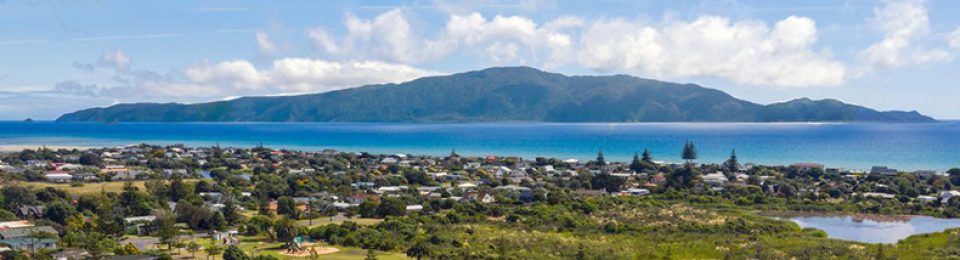
By Malcolm Warr (1939–) dated 1977 and now in the Te Manawa Museum, Palmerston North. This could be inspired by an old photo as nearly all the once big dunes have been flattened.
First, GO THE ‘CANES!! How good was that game?! I’ve just got back in from the Ōtaki Surf Life Saving Club mid-winter swim and thought I’d send my monthly update as I warm up!
In short, this covers some recent announcements for our region like new classrooms, new ideas we’re taking to the election like compulsory KiwiSaver (but with extra support for children, parents and elderly), my two Member’s Bills, and it gives you some upcoming events to put in the diary with the PM, Nicola Willis, Erica Stanford, and Paulo Garcia.
This year’s budget is improving our region
Last Thursday Erica Stanford and I announced six new classrooms for Paraparaumu College. This is just one more commitment from this year’s budget.
The budget also includes extra property funding and new Learning Support Coordinators for local primary schools, funding to setup a new Cancer Infusion Clinic in Kapiti, local environmental protection in Ōtaki, and more investment in our new electric trains and expressway to Levin (both under construction now).
This is not a spending-spree trying to buy support at the election as some want, but instead it’s about making meaningful investment where it makes a tangible difference in areas like health, education, police and defence, and at the same time getting our very serious debt problems under control.
We can see the results of our careful economic management are showing already. Remember when fuel prices raced up and some people wanted us to throw money around. Some, remembering the inflation when Labour did ‘cost of living payments’ said we should do nothing. Our balanced approach has provided targeted temporary support for those who really need it, but inflation hasn’t risen and fuel prices are coming down. This is the kind of balance we need.
I’m helping locally too…
Here is just one story of how I’ve had the privilege of making a difference locally. Listen to what Sarah had to say about helping her son Nathan and her family in Te Horo.
This weekend, the PM announced another election commitment for National, it’s all part of our plan to fix the basics and build the future. This idea is all about providing security in retirement for all Kiwis. We know that Superannuation is becoming increasingly expensive, but we need to ensure everyone is setup to enjoy their years of retirement.
The next National Government will:
Make KiwiSaver compulsory, so everyone has more financial security when they need it later in life
Give new babies a $1500 kickstart in their KiwiSaver, because the early you start, the faster it grows
Pay the employer contribution for parents on maternity leave, so looking after your newborn doesn’t disadvantage you
Allow over-65s to get employer contributions if they choose to work.
Remember this number
$9b – that’s how much we spend every year paying just the interest on the debt Labour left us with. That is more than we spend on Police and Customs and Defence and Corrections and Courts all combined. If we weren’t servicing Labour’s debt we could build four or five extra hospitals every single year! That’s why our approach to the economy really matters.
Tim and Catherine Wedd MP visit the Waikanae Clinic
Secondly, I mentioned the importance of our health targets above. Let me show you the numbers:
Emergency Departments.
Target: 95% of patients admitted, discharged or transferred from ED within 6 hours.
2017: 89.2%
2023: 67.5%
Dec 2025: 74.2
Cancer Treatment.
Target: 90% of patients receive their first treatment within 31 days of a health professional’s decision to treat.
2017: 88.6%
2023: 84.9%
Dec 2025: 87.0
Health targets work. Labour want to cancel them again and patients will pay the price.
Don’t forget the new cancer clinic is coming!
My chance to make progress for our region
I’m lucky that I’ve now had two Member’s Bill drawn out of the ballot.
The first is the Better Regional Boundaries Bill, which makes it easier to get help if you live in the corners of regions like Kapiti. In Ōtaki you get social housing from Kainga Ora in Porirua, but first you need to get on the waitlist at MSD … in Levin! You can’t go to the Porirua or Paraparaumu MSD offices. You get Police from Levin, but Civil Defence from Paraparaumu. Ambulances and hospitals work to different boundaries, so do Courts and Corrections.
My second bill institutes a Humanitarian Aid and Disaster Relief Medal to recognise the efforts of first responders, including military, Government and humanitarian organisations, during disasters, emergencies and other significant events. Firefighters who helped in Australia in 2020 got the Australian equivalent of this medal, but those who deployed to Canada last year got nothing. Personnel helping after the 2004 Boxing Day Tsunami were recognised but those in Samoa 2009 were not. Neither were many who served at White Island or the Christchurch Earthquake. My bill removes the inconsistency and demonstrates the value that I place, as does the National Party, on service. Those who serve our community deserve our recognition and this is a small but visible way of doing exactly that. It will have its first reading in Parliament either very late on Wednesday night, or otherwise in late July. Submissions will open after that.
I don’t just want to give Firefighters a medal, I want to make sure they have the tools to do the job. That starts with the Appliances (Fire Trucks) they need. I called for, and have been leading, an inquiry into FENZ for the last couple of months. We’ve heard public submissions from every person who asked to speak to the committee, and we will be holding another significant hearing with the FENZ leadership on Monday July 20th. After that we can write our final report and talk publicly about our findings.
I have visited Fire Stations right across the country, with a few more to go, from Dunedin to north of Auckland and everywhere in between. I’ve heard the stories first-hand, I’ve climbed on the trucks, visited manufacturers, and I continue to do all I can to support our local heroes. When the fire breaks out, when the vehicles crash, or someone needs medical help and the ambulance is a while away, these are the people that run towards the danger, always serving our community.
Climbing the Skytower
I also spent a weekend in Auckland with firefighters from across the country for the Skytower challenge. This raised $2.5m for Blood Cancer New Zealand, helping to battle Leukaemia which didn’t just take my Dad and an uncle, but impacts so many families in our region and across the country.
It was also incredibly satisfying just to climb to the top, dressed in all their clothing and equipment, experiencing just a little of what they do day in, day out. And I was quietly pretty happy with the time I managed.
The choice this year
The choice at this year’s election is becoming increasingly clear. On November 7th you can vote to continue the path we are on, fixing the basics and building the future, or we can go back to the future with more spending, more debt, and that only leads us in one direction.
Three years ago the basics had been replaced with ideology: health targets had been removed and wait-times blew out; achievement in education was the lowest we’ve had in decades; ram-raids were an every-day thing and consequence for crime had been replaced by a myopic attempt to have less people in prison no matter the rise in crime.
We’ve been fixing the basics: wait-times are improving; phones are gone from school and the basics of reading, writing and maths are back, and the results are showing already; gang patches are gone, consequence is back, and last year in our electorate and every other, there were (on average) 690 less victims in 2025 than there were in 2024, and no ram raids at all, continuing the trend of safer communities.
The choice in November should be simple. Vote for National and we can build the future we all need and deserve.
Join our MPs in Kapiti at these events
There are a number of chances for you to join me on the campaign over the next few months:
Over 60? Join MP Paulo Garcia and me in Paraparaumu for morning tea on Friday July 3rd. Details below. $10pp.
Under 60? Join Hon. Nicola Willis and me in Waikanae for drinks and canapés on Thursday August 6th. This is focussed at those in work. $100pp.
Everyone is welcome at a special afternoon tea to officially kick off the campaign in Raumati on Sunday August 16th, with special guest Hon Erica Stanford. Raumati Beach Bowling Club, 2pm. Koha at the door welcome.
Meet the PM: Everyone is welcome at a special public meeting with me and our leader Rt Hon Chris Luxon, Paraparaumu, Wednesday August 26th. No cost.
The new breast cancer clinic we opened in Waikanae, with expanded free access up to 74 years
The new cancer clinic coming to Kapiti so local patients can get treatment closer to home
The new expressway to Levin already under construction
New electric trains coming for Ōtaki, multiple times each day, including weekends
A 50% increase for school property funding, and six new classrooms at Paraparaumu College
Learning support coordinators for every primary school
Structured learning is improving results for our children
Funding for Ōtaki River cliff protection
Extra funding for the Kapiti health shuttle
Fast-track legislation to support almost 7000 new homes across the region, and a reservoir and wastewater in Pukerua Bay.
Support for Kapiti Airport
We need to keep Kapiti Airport operating for the resilience of our region. It might be an earthquake or it might be a fire in the terminal, but we could lose Wellington Airport at a moment’s notice and then Kapiti is the only option for our region. We need our airport.
I’m gutted to lose Air Chathams, but they were never the primary reason to keep our airport. The same week they announced their departure, we had three LifeFlight air ambulances parked at our airport because Wellington was fogged in. We need our airport.
Our Government is doing what it can. We offered Air Chathams and Sounds Air loads, and I’ve personally worked with the Minister, CAA, Airways
Weekly updates
Have you seen I’m putting out a weekly video update, explaining one current issue each week? They come out every Tuesday at 5pm, they’re only two minutes, and you can find them on TikTok, Instagram or Facebook.
Join us on July 3rd, 10am at Coast Community Church auditorium, for morning tea and a chance to speak with, and hear from, special guest Paulo Garcia, MP for New Lynn. These are always popular events, and we’d love you to join us (even if you’re under-60!). RSVP helps with catering numbers: e-mail Lorraine pollockl@outlook.com.
You can also save these dates:
August 7th, 10am Sam Uffindell, MP for Tauranga Whitby Bowling Club
September 4th, 12pm — soup and buns lunch! Stuart Smith, MP for Kaikōura Venue tbc
Public confidence in healthy systems relies on openness, proper investigation and informed debate. This week we examine four issues highlighting transparency and accountability, in short supply in recent times.
We look at proposed changes to the Hazardous Substances and New Organisms (HSNO) Act. It appears a subtle way to sidestep the Gene Tech Bill while still allowing the dangerous technology to be set loose on the population.
At last, a regulator experiences some consequences for its misdemeanours. The Health Minister has not reappointed senior leaders at the Medical Council of NZ.
We also revisit coronial findings following the sudden death of a healthy 21-year-old, and consider another case involving the death of a young man the day after a covid booster vaccination but with no mention by the coroner.
The Government’s proposed amendments to the Hazardous Substances and New Organisms Act are a sly substitute for the stalled Gene Technology Bill, and intended to streamline approval pathways for hazardous substances and new organisms. The now familiar changes will reduce opportunities for public participation and increase reliance on overseas regulatory decisions. We share our latest objections sent in to the Select Committee, looking at concerns raised by opponents, and why we believe these changes deserve much closer public scrutiny. Read the full article
This week sees the hard-won news that the government has replaced the Chair and Deputy-Chair of the Medical Council of NZ. Not ostensibly for covid crimes – though that reckoning draws closer – but for pushing a Marxist ideological race agenda onto medicine. We examine the landscape of this decision and acknowledge Minister Brown’s imperative, as well as the predictable reaction from some medical leaders who may well be getting nervous at the inconvenient upholding of a statute (HPCAA) and of election commitments to remove race-based access to health care.
A healthy young man dies suddenly while celebrating with friends, with the Coroner finding he died of cardiomyopathy and myocarditis.
In this series we continue to look at how sudden and unexpected deaths in young people are inadequately investigated and demand that every possible contributing factor receives appropriate consideration.
Yet another tragic case involves a young New Zealander who died the day after receiving a covid booster vaccination – a salient fact ignored by the coroner in finding he died of natural causes.
The broader importance of thorough pharmacovigilance to help families grieve and ensure the public can have confidence in the coronial process is paramount, and we must all insist that relevant questions are carefully examined and not swept under the carpet.
We have an online clinic where you can be seen by some of our NZDSOS team. You can also be seen in person depending on your location. No referral is needed.
Please note: Because NZDHHC is not government funded the appointments are more than a normal GP appointment through a PHO. However, you will see the difference compassionate and independent medical care makes. NZDHHC Website
We have recently identified an issue affecting our website-based e-mail ticket support system, which has resulted in some enquiries not being received or responded to as expected.
If you have submitted an enquiry through our website recently, thank you for your patience while we work through the backlog and ensure all messages are attended to.
The demand for authentic welcomes and blessings is increasing and people want someone who can bring cultures together but also take them on a journey of understanding to help encourage better engagement with Te Ao Māori. –Take Tuia
The long, the short and the tall
You have my blessing, is a common phrase in western society and perhaps others, and is often given by parents or guardians to the relationships, enterprises and plans of their family. It is also something that is frequently sought to get the go-ahead for progress and developments. Ministers of the church frequently bless married couples, families, individual and groups, and in these instances there is a religious connotation.
Over the past few decades a “Maori blessing” – usually a karakia (prayer) – has become standard for opening public facilities like highways, public gardens, memorials, hospitals, libraries and other public buildings. On these occasions when the blessing is granted, it is usually by a member of the local Maori elite and seems to have become obligatory in the present political climate.
A case in point was the recent opening of the Wellington Public Library.
The meaning of karakia
Karakia are prayers or incantations. They are generally used to ensure a favourable outcome to important events and undertakings such as tangihanga (the ritual of farewell to our deceased), hui (meetings), unveilings etc., however they can cover every aspect of life. For example: welcoming the dawn and farewelling the day, to ensure a safe journey, for different types of illness, when undertaking tā moko (tribal ‘tatoo’), when carving wharenui (meeting houses) orwaka (traditional canoe), and more. Karakia, in their true essence, are ritual chants invoking spiritual guidance and protection. University of Otago
Essentially they are positive and aimed at ensuring a favourable result.
Are they Christian?
Strictly speaking they are not, as they pre-date the arrival of Christianity with the British and European settlers, and especially missionaries, in the early 19th century. However once the Christian faith arrived and an increasing number of Natives/Maori took up the religion karakia took on a largely Christian context.
So today blessings often invoke the Christian God, but there are many Maori purists who want to see traditional Atua (Gods/guardians) as the centre-point of karakia. Many non-Maori may wonder why public blessings don’t include the local ministers, rabbis and other religious leaders.
There is also the question of whether local authorities feel obligated to have a Maori blessing when the new art gallery, library, hospital or some other public facility is opened. Most New Zealanders are not Christians so should meetings, work days and official openings have a karakia?
My view is that they should not be imposed by the local Maori leadership and activists, and that in democratic fashion if there is to be a “blessing” the majority involved in the gathering, opening, whatever should assent to the process. If some do not wish to be part of it they should be excused. No payment/koha should change hands.
The current New Zealand Government has introduced a shocking Conservation Amendment Bill to Parliament.
The NZ Alpine Club background briefing says that the Bill proposes to change the “core functions of DOC, requiring them to enable the economic use and development of PCL ‘to the greatest extent practicable’. This is a paradigm shift in how public conservation land has been managed and means that conservation values may be sacrificed if the economic benefits of a proposed use or development are considered significant enough.”: https://alpineclub.org.nz/…/conservation-law-reform…
Our conservation estate has been built up over many, many decades to safeguard our natural heritage for its intrinsic values and as public estate for all New Zealanders to enjoy. This Bill is a scandalous and destructive attack on this estate and on the rights of New Zealanders.
I urge you to make your objections to this known via a parliamentary submission and through your social media and other networks. This is election year and this must be a major issue. If we lose these precious areas from public ownership, they are gone forever.
Although we don’t often agree with Helen Clark, we share her concern about this. Of course, she doesn’t mention the restrictions that the Jacinda regime endorsed regarding the ability of certain iwi to keep non-members of those iwi off public conservation land. –Eds