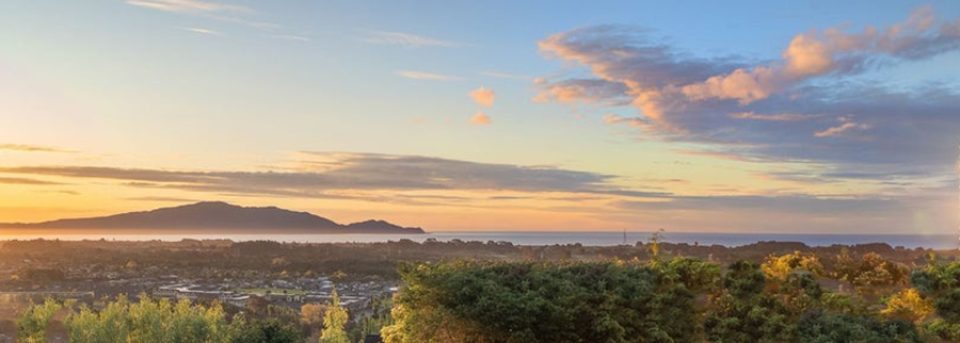
autumn aerial sunset view at the Estuary/Waimanu Lagoon
10 Sunday May 2026
Posted in Uncategorized

10 Sunday May 2026
Posted in Uncategorized
10 Sunday May 2026
Posted in Uncategorized

The Stalin of Albania — Enver Hoxha. He quickly consolidated power over 1944-45 after the Germans moved out and even by communist standards his deeds were remarkable in their brutality:
Immediately politicians who had opposed the pre-war regime but were non-communist were tried (and pre-convicted) as ‘enemies of the people’.
The secret and not so secret state security apparatus was rapidly created.
All religions were banned (except worship of the Dear Leader) and 2,169 churches or mosques were demolished or converted to other uses. Religious names were made illegal.
Class ‘enemies’ such as Kulaks (better-off peasants) were next for communist special treatment. Those suspected of holding ‘wrong beliefs’ could expect interrogation and about a third of the population got it. Imprisonment was the mechanism by which ‘wrong think’ would be corrected. For communists, suffering is beneficial to the person experiencing it. A total of 36 specific torture methods used have been documented. These included dark underground solitary confinement chambers for complete sensory deprivation.
An estimated 50,000 people were imprisoned for political reasons (remember the population of Albania in 1950 was only 1.25 million) in 23 prisons and 48 concentration camps. 5,577 men and about 450 women were executed and a further 1,000 died in the prisons of malnutrition and disease.
Eventually, Albania split with all the other communist regimes — Soviet Union, China and Yugoslavia — and decided to waste the country’s very limited resources (it was the world’s third poorest country per capita in 1985) on building some 221,000 semi-spherical concrete bunkers throughout the country in case it was invaded, which it never was.
10 Sunday May 2026
Posted in Uncategorized
10 Sunday May 2026
Posted in Uncategorized

If it’s not already obvious to you, the fact that TVNZ’s ‘political editor Maiki Sherman has lost her job should now make it very clear: the media—especially the state broadcasters, both of them—are about to find out what it means not just to make and report the news but to be the news.
Just look at what’s happened this week alone. And this is only a sample—this has been building for some time.
In one week, TVNZ political editor Maiki Sherman has lost her job over poor behaviour in a minister’s office. David Seymour, the ACT Party leader, has taken a significant swipe at RNZ for hiring John Campbell, who is well known for voting left—something he’s said himself. Seymour has even gone so far as to suggest the head of RNZ should lose his job over it.
Then there’s the BSA, effectively the head girl telling everyone off for bad jokes at the party, being abolished.
The politicians are coming for the media and Sherman’s case is an example of that. The National Party lined her up. They complained about her allegedly door-knocking Stuart Smith for 10 minutes at night. They confirmed that she had sworn at Nicola Willis’ event in the office—which was unusual, given that Nicola effectively broke Chatham House rules that MPs normally guard jealously.
Now, look—I feel sorry for Maiki losing her job. That’s a very high price to pay. But I don’t feel sorry for the media in general for what’s coming. We’ve had this coming.
For years, we’ve collectively pushed a certain world view through the framing of our stories. We decide who the victim is, who the bad guy is and what language we use—labelling things as “controversial” to signal to the audience that something is bad, like the “controversial Treaty Principles Bill”.
We flip angles too—turning a positive government crime stats story into a negative gang-focused story for the same government.
And when Radio New Zealand, which is supposed to be more impartial and balanced than any other outlet in this country, chooses someone to front its flagship programme who has explicitly said he votes for left-wing parties—well, that matters.
We deserve what’s coming to us in this election. We can’t shove the scrum for years and not expect to become part of the on-field play.
And I, for one, am not unhappy about what’s about to happen. I think it’s time for this to be sorted out. If this election brings media bias into sharper focus and forces all of us in the media to stop, reflect and think hard about what we’ve been doing, I don’t think that’s a bad thing.
Heather du Plessis-Allan is a journalist and radio broadcaster who hosts Newstalk ZB’s weekday Drive-Time Show – where this article was sourced.
10 Sunday May 2026
Posted in Uncategorized


10 Sunday May 2026
Posted in Uncategorized


by Geoffrey Churchman
Being a long-time fan of surrealist art of which Brent Wong is surely NZ’s best exponent, I went to the opening of this exhibition last Thursday evening.
Born in New Zealand in 1945, Brent Wong spent the early part of his life in Wellington, moving north to the main commercial centre, Auckland, for a time, before settling on the west coast and he currently lives in Muriwai. Unfortunately, being now 81 he doesn’t like travelling so wasn’t at the opening.
Although Brent Wong’s work is best described as surrealistic — some say realist and visionary — he believes that there is a high level of symbolic content in most of his paintings — reflecting autobiographical material.
Regardless of what label is applied, his pieces achieve a ‘wow’ reaction.
It’s interesting what you can learn from talking to people at these events. One guy from the Hutt Valley told me that people have become fed up with the succession of LGBTQ-etc. themed exhibitions at the Dowse Gallery in Lower Hutt. I told him that fortunately we’ve not had that in Waikanae, although the radical activist artist Robyn Kahukiwa’s exhibition about Captain Cook in February 2020 ruffled a lot of feathers, see this post.
The Brent Wong exhibition, on the upper floor, lasts to the end of August.
10 Sunday May 2026
Posted in Uncategorized
10 Sunday May 2026
Posted in Uncategorized

It’s a safe bet that the same applies in NZ. They should all be fired and replaced.
10 Sunday May 2026
Posted in Uncategorized
By Roger Childs

I want to help create a future where whanau, hapu and iwi are thriving socially, culturally and economically. –Te Puoho Katene
It’s well past the time to end special ethnic favours
Katene is the Labour’s candidate for the Te Haurauru seat in the 2026 election. He wants to see Maori thrive in the future but does he care about the over 80% of New Zealand’s population who have other ethnic backgrounds?

The special seats for Maori have long been unnecessary and New Zealand First have recognized this in proposing legislation to abolish them on February 18, 2026.
New Zealand First has today introduced a Member’s Bill that will ensure a binding referendum on the Māori seats is held in conjunction with the 2026 election.
If the bill is passed and the referendum confirms an end to the seats, New Zealand will become a truly democratic country. So why aren’t the mainstream media enthusiastically supporting New Zealand First’s initiative?
Can anyone justify having special seats for Maori?
No they can’t. All Maori have far less than 50% Polynesian blood and are in fact mainly descended from 19th century immigrants and colonists. They are New Zealand citizens and their needs — for housing, health, education, higher incomes, welfare, roads, public transport, libraries, entertainment, sports facilities etc … — are no different from any other New Zealanders. Like everyone else in the country they are descended from immigrants. However, despite these realities, Maori have many separatist institutions, as well as 7 special parliamentary seats, that don’t exist for other citizens.
No other ethnic groups – Samoan, Tongan, Korean, Chinese, Indian to name a few, don’t have special rights or recognition and don’t seek it. It they have citizenship they are looked after like all Kiwis.
The 1986 Commission recommended abolition
In 1967, Maori were allowed to stand in general seats, and in 1975, National Party candidates Ben Couch and Rex Austin made the breakthrough in winning Wairarapa and Awarua respectively.
In the elections that followed more people with some Maori blood were elected in general seats. This prompted The Royal Commission on the Electoral System in its 1986 Report to recommend the abolition of separate representation.
But it didn’t happen. By 2002 the number of designated seats has increased to seven and there were 25 MPs in parliament with some Maori blood. Today there is no longer any justification for a special allocation for people who are in fact part-Maori and mainly descended from colonists.
Time for equality

People with even the smallest amount of Maori blood have the choice of being on the general or Maori roll. However, for the 2023 election there has been a major push for anyone calling themselves Maori to be on the latter.
The existing Maori electorates are huge: Te Tai Tonga covers the whole of the South Island, the Chatham Islands and parts of Wellington and Lower Hutt, making it impossible for the elected member, Rino Tirikatene, to regularly keep in contact with his constituents.
Well looked after
People with some Maori blood are well catered for by various governments departments and have their own Maori Affairs Ministry (Te Puni Kōkiri). Meanwhile the Waitangi Tribunal, using taxpayer money, has handsomely rewarded iwi, and Maori businesses and trusts which pay lower taxes than other commercial enterprises.
These special policies are in breach of the United Nations Declaration of Human Rights. Article 1 states All human beings are born free and equal in dignity and rights. Not in New Zealand, if you have any Maori blood you are special.
That needs to change and the New Zealand Party’s proposal to allow the people to decide in a referendum is the way to go. It the citizenry decides “no more Maori seats” we become a democracy in which all people are equal regardless of their ethnic origins.
See also this piece on the Good Oil
10 Sunday May 2026
Posted in Uncategorized

Senator Ron Johnson says CNN canceled his interview yesterday after he told them he planned to discuss internal documents showing public health officials covered up covid ‘vaccine’ harm.
