
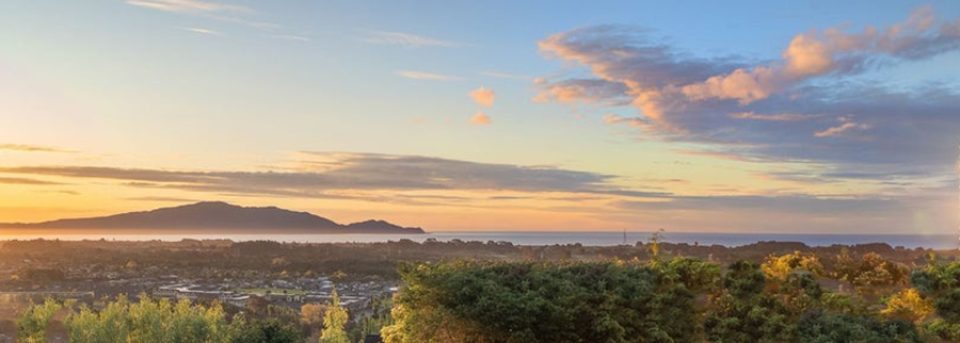
An atmospheric Sue Lusk photo taken this April, but it has a winter feel to it, so appropriate to the shortest day of the year.
21 Friday Jun 2019
Posted in Uncategorized
An atmospheric Sue Lusk photo taken this April, but it has a winter feel to it, so appropriate to the shortest day of the year.
21 Friday Jun 2019
Posted in Uncategorized
One of the guys Geoffrey went to school with was Lazlo Fejos, who now, as Les Fejos, sells Real Estate in Auckland. His brother Steve does likewise in Wellington. Their parents were among the nearly 250,000 who escaped from Hungary’s totalitarian regime in October 1956, ending up in NZ. Like most people from Eastern Europe, they were strongly anti-Communist and would never vote for the Labour Party.
The uprising in Hungary was a result of over 11 years of brutal Communist repression and was the most notable post-World War II demonstration of where systematic government attacks on civil liberties like those underway by Jacinda & Co. will lead if they are not strongly opposed.
Although Hungary was a German ally in World War II, its experience of totalitarianism began in March 1944 when the Nazis moved in and occupied the country. In October after the Nazis forced President Miklos Horthy to go, the local fascist Arrow Cross Party, with Nazi support, became the government; but didn’t last long. That month the siege of Budapest began when the Red Army moved into Hungary, which was defended by two Waffen-SS divisions and Arrow Cross militia. The siege ended after 102 days of fierce fighting (the third longest siege of World War II after Leningrad and Stalingrad) with about 120,000 dead and 80% of the city in ruins.
Following the end of Nazi Germany, Hungary became a satellite state of the Soviet Union whose Bosses selected Matyas Rakosi to front the Stalinization; Rakosi de facto ruled Hungary from 1949 to 1956. His government’s policies of militarization, nationalization, collectivization and war compensation to the Soviets led to a severe decline in living standards. In imitation of Stalin’s NKVD (from 1953, KGB), the Rakosi regime established a secret political police, the AVH, to enforce Communism. In the ensuing purges approximately 350,000 officials and intellectuals were imprisoned or executed from 1948 to 1956. Many freethinkers, democrats and Horthy-era functionaries were secretly arrested and incarcerated in domestic and foreign gulags. In all some 600,000 Hungarians were deported to Soviet gulags, where at least 200,000 of them died.
Unsurprisingly, by 1956 Hungarians wanted the Communist regime overthrown.
After a massive number of Soviet troops were sent to crush the rebellion, its leaders were dealt to as expected; nevertheless, there was a slow liberalisation in the following years which brought about an accompanying slow improvement in living standards and more freedom.
In 2002 the former Headquarters of the AVH at 60 Andrassy ut (Ave) in Budapest was made into a Museum dedicated to the methods and victims of Fascist and Communist brutality: the Terror Haza (Terror House) — website

When in Budapest, this museum is a must-visit (our photo from 2010).
20 Thursday Jun 2019
Posted in Uncategorized
 Introduction
It is said that drinking about 7 to 8 glasses of water daily is important for your health. One thing many people do not know is that having the first glass of water as soon as you wake up also comes with its therapeutic benefits. This traditional Ayurvedic treatment has benefits for conditions that range from asthma, pain to even cancer. How to drink water in the morning for best results?
* 70% of the human body content is water, and so water plays an important role in the proper functioning of your body.
* The human brain cells contain about 85% of water.
* 75% of muscles is water
* Bones also contain about 25% water
* 82% of blood consists of water.
It is also helpful to consume foods that contain lots of water; for example soups (broth-based), vegetables and fruits.
20 Thursday Jun 2019
Posted in Uncategorized
Those who go rambling in bush/woodlands at present should look for what is to be seen on old logs and on the ground. These pictures of different types of fungus are by retired photographer, and now anti-1080 poison campaigner, Dave Wilson.


19 Wednesday Jun 2019
Posted in Uncategorized

This lovely portrait is of Karl Webber’s great grandmother. Waikanae people will recognise two of the town’s street names.
Karl says: “there’s a heap of really cool info about the whanau in Chris Mclean’s book Kapiti and other places. Chris’s book is really good in my opinion, has a lot of pics and info from the whanau. Kate Hartmann at Tutere Gallery sells them at 48 Tutere St, Waikanae Beach [during the season, and Coastlands Paper Plus stocks it], or the library have the book as well. My cousin Rewa Morgan who works at the Waikanae Library would be a great person to go chat to.
“Utauta’s Dad, Wi Parata, was paramount chief of the Te Atiawa people at Waikanae and his half-brother was Hemi Matenga. Many of the streets in Waikanae and the coast are after our whanau members.
“We come from Te Rangihiroa, Ngati Toa chief who is buried at the north end of Kapiti, lived at Motu Ngarara where I stay and where he signed the treaty on 4 June 1840, the second to last signing.
“My father, Hemi Hona Webber, Jim, was the eldest male line descendant of Utauta Parata and Hona Webber / Tahiwi.”
19 Wednesday Jun 2019
Posted in Uncategorized

Seen last week; from left to right: a 1952 Chevrolet DeLuxe; a 1971 Volkswagen Beetle; and a 1967 Chevrolet Camaro.
19 Wednesday Jun 2019
Posted in Uncategorized

Moves by the Mayor and Councillors to declare a climate change emergency are a sham and a cheap pre-election stunt says Guy Burns, the Deputy Chair of the Paraparaumu Raumati Community Board.
“Basing a climate change emergency on eroding coastlines is a completely false argument. I can remember clearly the massive damage caused to seaside properties in 1976. Similar events occurred in 1954 and 1957; it wasn’t called climate change then, people called it coastal erosion. Our shoreline used to be near the railway line and has shifted due to earthquake activity. The last big quake of 1855 uplifted coastline in the Wellington area up to 4 metres in places.
“Declaring a climate change emergency is a smoke-screen to hide the systemic failure of Council allowing residential buildings near the coastline. We are now paying the price for bad choices made a long time ago.
“A far more effective strategy for Council is to encourage ratepayers to make tangible steps towards sustainability. Promoting such things as composting, bikes, walking and home recycling would be useful. A reliable source tells me Councillors are still continuing to drive to their meetings. If there was an emergency, I would expect Councillors to urgently change their energy-use footprint.
“It’s no coincidence the declaration is being made a few months out from this year’s elections. Obviously the Mayor and his supporters are hoping to attract the votes of the climate change lobby.
“This is my view and not of the Raumati Paraparaumu Community Board as a whole.”
 Guy Burns
Deputy Chair Raumati Paraparaumu Community Board
04 9040789 021 2624645
18 Tuesday Jun 2019
Posted in Uncategorized

The Orwellian dystopia of thought control and an omnipresent surveillance state has become our reality. George Orwell’s book 1984, although meant as fiction, has turned out to be an incredible prediction of our future.
For Jacinda & Co., 1984 has become an instruction manual.
18 Tuesday Jun 2019
Posted in Uncategorized

Song thrush (photographer unknown)
by Carol Sawyer
I was thinking about this today…
‘Daily Southern Cross‘, 17 September 1862, Page 4:-
“We have received intelligence of the arrival at Auckland, on the 8th of April, of the ship ‘Cashmere,’ Captain Petheridge, which left St. Katherine’s Docks on the 9th of December with the addition, to in ordinary freight, of a consignment of 147 singing and other birds, intended for acclimatisation in New Zealand. Of this number it appears that eighty eight were alive when the ship reached its destination—a much larger proportion than, all circumstances consulted, it was expected would have survived.
There were placed on board 9 partridges 2 pheasants, 12 blackbirds, 13 thrushes, 12 skylarks, 8 goldfinches, 8 bullfinches, 9 linnets, 16 chaffinches, 16 sparrows, 12 starlings, 2 Canadian geese, 4 barnacle geese, 12 teal, and 12 wigeon — 117 birds in all, occupying 81 cages.
All these birds were wild caught, none of them having been reared by hand from the nest. It may be as well to add a list of the eighty-eight birds which have got safely out. There are— 4 partridges 10 blackbirds, 11 thrushes, 10 skylarks, 4 goldfinches, 3 bullfinches, 6 linnets, 6 chaffinches, 7 sparrows, 9 starlings, 2 Canadian geese, 4 barnacle geese, 11 teal, and one wigeon.
The same solicitude about the health and comfort of the birds appears to have been manifested as in the Australian consignment in 1858. May they thrive in their bloodless and unobtrusive mission of colonization. — The Field.”
Well, the bullfinches, partridges, linnets, barnacle geese, teal and wigeon didn’t make it, sadly (although we have our own species of teal). What must it have been like to be one of those birds… one of the 6 chaffinches, say, released here after a three month trip by sea? It must have seemed so very strange and scary. There would have been all these birds they had never seen before, who saw them as aliens and attacked them. Poor little things.
What a great pity the wigeon didn’t survive… only one made it to NZ of the 12 that boarded ship. Such a beautiful duck. See the photo.
I wish they had brought nightingales and bluetits as well, and what an addition the Great tit would have been.
Interestingly, the introduction of Canada geese is generally attributed to US President Theodore Roosevelt. He gifted some of the first Canada geese to this country in 1876. Presumably this pair brought to NZ in 1862 didn’t make it.
The Deforestation of New Zealand:
“Around 1000 AD, before humans arrived in New Zealand, forest covered more than 80% of the land. The only areas without tall forests were the upper slopes of high mountains and the driest regions of Central Otago. When Māori arrived, about 1250–1300 AD, they burnt large tracts of forest, mainly on the coasts and eastern sides of the two main islands. By the time European settlement began, around 1840, some 6.7 million hectares of forest had been destroyed and was replaced by short grassland, shrubland and fern land. Between 1840 and 2000, another 8 million hectares were cleared, mostly lowland or easily accessible conifer–broadleaf forest.” – Te Ara Encyclopaedia of NZ
So the forests, where so many of our endemic bird species lived, have been hugely reduced in size but the cities and pasturelands that remain are now home to so many of our introduced birds.
In May thrushes started singing — which is what made me write this post. I love their song all around me. Only the male bird sings. In June and July the male blackbirds start, and in August the cheerful little chaffinch. For me the chaffinch is the “song of summer”. It has been a hugely successful introduction, doing no harm, and inhabiting our back country valleys as well as our towns and cities.

Chaffinch photo by Carol Sawyer. (He was named Joey and, although wild, learnt to fly to me for food.)
The period from the end of January until Autumn is pretty quiet, but with the onset of winter, it is time for the male birds to start attracting their mates, and to out-sing each other.
Most of us, whether in the cities or in rural areas, are lucky enough to have the presence of tui, bellbird, grey warbler, and fantail, among others. These little natives are still everywhere in good numbers.
The helpful chart is in an old bird book I picked up in a secondhand shop somewhere — A Field Guide to the Birds of New Zealand by Falla, Sibson and Turbott, Collins NZ, 1966.

18 Tuesday Jun 2019
Posted in Uncategorized


No SUVs were about, but come the whitebait season there will be, unfortunately, and the Oystercatchers’ nests will be endangered.