• About
  • Canadian Citizens Covid-19 Inquiry docs
  • Donate to us
  • The local iwi history KCDC wants to avoid

Waikanae Watch

~ issues relevant to Waikanae people and others

Waikanae Watch

Monthly Archives: May 2021

Spotlight on Reikorangi

29 Saturday May 2021

Posted by Waikanae watchers in Uncategorized

≈ 1 Comment

by Roger Childs

… he was more interested in not making money, and he’s certainly been very successful at that. –Jan Wright on husband Wilf

End of an era

The death of potter, thinker and extrovert Wilf Wright at the age of 89 years and 364 days, closes a chapter on the history of the beautiful valley tucked inland from Waikanae. For over 50 years the name Reikorangi was synonymous with the Wrights’ pottery, café and farm located off to the left as you entered the Mangaone Valley.

Reikorangi is one of the most delightful spots on the Kapiti Coast and, has its own unique character. Over the years our family has driven, walked, run, ridden and orienteered in the sheltered valley which has beautiful scenery, varied terrain and a mix of farms, native bush and lifestyle blocks. 

At the eastern end of Ngatiawa Road beneath Kapakapanui there is a “settlement” of perhaps 30 properties, often with superb gardens and a few farm animals. In this idyllic setting the residents enjoy a relaxed lifestyle just 5 – 10 km from Waikanae. Being away from the sea which moderates the climate of most of the Kapiti Coast, it is naturally cooler in winter and warmer in summer. 

Going places 

Reikorangi is also on the way to somewhere else. It depends on how you are moving.

  • In a car you can head over the Akatarawa Road to the Hutt Valley and beyond to the Wairarapa. It is a challenging, windy drive which because of its narrow road width in many places, and is not for the faint-hearted. However, the bush is beautiful and there are magnificent views on the Waikanae side of the range. Furthermore, about 30-35 minutes’ drive from Waikanae is the popular Staglands Wildlife Reserve and Café which is well worth a visit. 
  • On a bike there are great rides into the Mangaone Valley and other cul de sacs, however many serious cyclists love the climb of many corners up the “Akas”, and some do the big loop via the Hutt Valley and the Paekakariki Hill training for events like the Round Taupo Cycle Challenge.
  • If you are a tramper you can access the trek up the Kapakapanui peak – you have a choice of two climbs – and can head deeper into the Tararuas from the top if you wish.
  • There are also plenty of enjoyable walks along the two major roads beyond the pottery, the best known being the Mangaone Track which goes through to North Mangaone Road and out to Te Horo. There are convenient carparks at each end.
  • For runners the 8 km track, with its challenging terrain and delightful mix of bush and farmland, is a great experience. For some over the years, like myself, it has been part of a varied marathon training run, starting in Elizabeth St Waikanae going north to Te Horo, along the inland farm roads to the Mangaone Walkway and back to Waikanae.

The legendary Wrights

Geese and pots in Wilf and Jan’s property (2017 photo).

In the 1950s Wilf bought a 4.5 ha block off the main Reikorangi road beyond the Waikanae River bridge, and with wife Jan they developed the pottery. Behind the shady car park overshadowed by large macrocarpa trees, they built a kiln, opened a shop to sell their pots, established a café, planted trees and brought in a distinctive range of animals and birds. It quickly became a popular place for visitors and tourists to drink coffee, eat Jan’s delicious scones, buy a pot or two and enjoy the relaxed environment of the sheltered valley. And if you could track Wilf down he was always keen to chat.

Our kids used to love going there especially to see the farm animals and I recall one occasion when we took my mother-in-law along. We have a wonderful photo of her behind a passing peacock flaunting its full array of feathers and “stealing” the shot!

One memorable highlight of our visits to the Wrights was a superb, multi-course mid-year Christmas dinner set in the relaxing ambience of their distinctive home surrounded by pottery.

Moving on

The Wrights closed the pottery and farm to the public last year. And now with Wilf gone Reikorangi has lost one of its great identities. However the valley retains its natural appeal and rural atmosphere, and is always worth a visit. Turn into Elizabeth Street over the railway line in Waikanae and head east towards the hills.

Share this:

  • Share
  • Share on X (Opens in new window) X
  • Share on Pinterest (Opens in new window) Pinterest
  • Share on Facebook (Opens in new window) Facebook
  • Print (Opens in new window) Print
  • Email a link to a friend (Opens in new window) Email

Like this:

Like Loading…

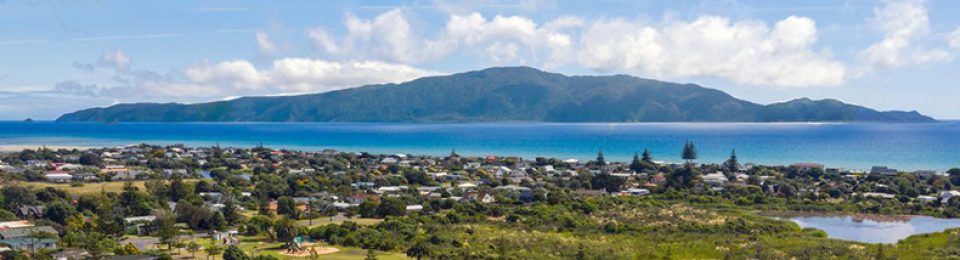
north Waikanae and Peka Peka viewed from Waioura Bay on Kapiti Island

29 Saturday May 2021

Posted by Waikanae watchers in Uncategorized

≈ Leave a comment

Karl Webber photo.

Share this:

  • Share
  • Share on X (Opens in new window) X
  • Share on Pinterest (Opens in new window) Pinterest
  • Share on Facebook (Opens in new window) Facebook
  • Print (Opens in new window) Print
  • Email a link to a friend (Opens in new window) Email

Like this:

Like Loading…

an analogy here

29 Saturday May 2021

Posted by Waikanae watchers in Uncategorized

≈ Leave a comment

Hundreds of cigarette filters and that alleged covid-stopping thin porous mask.

According to wikipedia:

“While laboratory tests show a reduction of “tar” and nicotine smoke, filters are inefficient at removing gases of low molecular weight, such as carbon monoxide.[7] Most of these measured reductions occur only when the cigarette is smoked on a smoking machine; when smoked by a human, the compounds are delivered into the lungs regardless of whether or not a filter is used.[2] The near-universal adoption of filters on cigarettes has not reduced harms to smokers and lung cancer rates have not declined”

The equivalent can be said about that mask, but for some reason, leftists don’t seem to like that being pointed out.

Share this:

  • Share
  • Share on X (Opens in new window) X
  • Share on Pinterest (Opens in new window) Pinterest
  • Share on Facebook (Opens in new window) Facebook
  • Print (Opens in new window) Print
  • Email a link to a friend (Opens in new window) Email

Like this:

Like Loading…

Waikane River art

28 Friday May 2021

Posted by Waikanae watchers in Uncategorized

≈ Leave a comment

by Ernest Mervyn Taylor (1906-1964) dated 1937.

Share this:

  • Share
  • Share on X (Opens in new window) X
  • Share on Pinterest (Opens in new window) Pinterest
  • Share on Facebook (Opens in new window) Facebook
  • Print (Opens in new window) Print
  • Email a link to a friend (Opens in new window) Email

Like this:

Like Loading…

open letter to the Dear Leader on mental health by Mike King

28 Friday May 2021

Posted by Waikanae watchers in Uncategorized

≈ 1 Comment

Dear Prime Minister

Today is the 3rd anniversary of Gumboot Friday and to celebrate I’ll be walking 100,000 meters in Gumboots around the Auckland Domain to raise $100k that will go towards our $5 million goal.

If we reach our goal it will provide over 37,000 free non-stigmatising counselling sessions for our kids. I say non stigmatising because under the current system the only way young people can get free counselling is to go to a doctor, be diagnosed mentally ill, and then go on a long waiting list before being met by an often burnt out mental health professional.

As a mother, can you imagine being subjected to this in the future? Sadly this is the reality faced by thousands of kiwi mums and dads every year as they try to get help for their distressed children.

Every day I am contacted by families begging for help after being told their children don’t qualify for counselling because they are not suicidal enough.

Every week I am on planes flying around the country meeting with distressed families whose children have been discharged from hospital after a suicide attempt with little or no support, often without even seeing a psychiatrist.

Three years ago I remember standing on a podium with you singing your parties’ praises as you announced that you were spending $1.9b on mental health.

As long as I live I will never forget that day. There was such a euphoric feeling in the air, full of optimism and hope and I believed with all my heart things were about to change, finally we had a government who cared.

Three years on I feel like we have let everybody down

Tomorrow also marks the anniversary of the letter I received informing me that I had been made a member of the NZOM for services to mental health and suicide prevention.

While I was honoured at the time, it no longer sits comfortably with me. Every day I look at myself in the mirror and ask “how can you wear this title when things haven’t changed and so many are still suffering?”

The truth is I can’t. I know none of this is your fault Prime Minister and I know you truly care about our children but the system is broken and it seems to our most vulnerable kiwis and their families that no one is trying to fix it.

On that basis I stand with those families and with great sadness I will be returning my NZOM Medal to Dame Patsy Reddy before she leaves office.

I know this is the last thing you needed to hear but I can no longer stand idly by hoping things will change and knowing they won’t.

To paraphrase Martin Luther King “for incompetence to prevail all it needs is for good people to do nothing”

Yours sincerely

Mike King

Share this:

  • Share
  • Share on X (Opens in new window) X
  • Share on Pinterest (Opens in new window) Pinterest
  • Share on Facebook (Opens in new window) Facebook
  • Print (Opens in new window) Print
  • Email a link to a friend (Opens in new window) Email

Like this:

Like Loading…

Image

Edgewater Park looking east

28 Friday May 2021

Share this:

  • Share
  • Share on X (Opens in new window) X
  • Share on Pinterest (Opens in new window) Pinterest
  • Share on Facebook (Opens in new window) Facebook
  • Print (Opens in new window) Print
  • Email a link to a friend (Opens in new window) Email

Like this:

Like Loading…

Posted by Waikanae watchers | Filed under Uncategorized

≈ Leave a comment

Karl du Fresne gets it spot on

28 Friday May 2021

Posted by Waikanae watchers in Uncategorized

≈ 2 Comments

One of the best of veteran journalist Karl du Fresne’s many excellent posts on his blog appeared on Wednesday and was headed We’re all in the same waka

It says in part:-

‘It has become the norm for people of part-Maori descent to recite iwi connections, but without any reference to their European lineage. That inconvenient part of their ancestry is routinely erased.

‘I say “inconvenient” because I suspect it suits many part-Maori activists not to acknowledge their bicultural heritage, the reason being that their bloodlines demonstrate that New Zealand is a highly integrated society. This conflicts with their aim of portraying us as intrinsically and irreparably divided, with one side exerting dominance over the other.

‘Here lies a central paradox of Maori activism that is never confronted, still less explained. It has possibly never been more relevant than now, when a radical agenda of change is being aggressively promoted by people whose mixed ancestry ironically gives the lie to the notion at the heart of their grievances – namely, that this is a country indelibly stained by racial prejudice and divided along racial lines into privileged and disadvantaged.

‘The truth, to put it in simple terms, is that we’re all in this together. We’re all in the same waka.

‘If this were truly a racist country, those “Maori” activists with distinctly European features and Anglo-Saxon surnames – testimony to a high degree of historical intimacy between Maori and Pakeha – would not be here. They exist because somewhere in their past, Maori and European partners were attracted to each other and procreated on equal and willing terms. That hardly seems indicative of a racist society.’


For the last few years Stuff senior reporter Joel Maxwell has been constantly (and falsely) proclaiming how racist Pakeha have always been to Maori: always stealing their property, always denying Maori any legal rights, committing genocide, and on it has gone. This seems to have suited the Stuff owner(s) since the Jacinda government came to power in late 2017 and even more so since last October.

Stuff’s journalism over the same period has become so partisan and unreliable, with such scant regard for balance and accuracy, that we think time has come for that media company to change its name: we propose tika, Maori for truth.

In the communist Soviet Union the official newspaper was Pravda, Russian for Truth, so what could be more appropriate for the newspaper of “the Sole Source of Truth” that is the Jacinda government? Stuff is an English word and thus unsuited to the New Order; no, it must be a Maori word. This media organisation should be well-named if nothing else.

Share this:

  • Share
  • Share on X (Opens in new window) X
  • Share on Pinterest (Opens in new window) Pinterest
  • Share on Facebook (Opens in new window) Facebook
  • Print (Opens in new window) Print
  • Email a link to a friend (Opens in new window) Email

Like this:

Like Loading…

Mahara Gallery Trust Board strengthened for new post-rebuild era

28 Friday May 2021

Posted by Waikanae watchers in Uncategorized

≈ Leave a comment

An international civil servant and the deputy chair of the Waikanae Community Board have joined the Mahara Gallery Trust Board.

Board Chairman Gordon Shroff says the appointments reflect the need to add new skills and experience to the board as the Mahara prepares for the future that will follow completion of the planned rebuild scheduled for late 2022.

David Shand worked for the World Bank, International Monetary Fund and OECD before returning to New Zealand in 2006. 

He was also formerly chair of the Tertiary Education Commission, a member of the Royal Commission on Auckland Governance, chair of the 2007 Rates Inquiry and a director of Meridian Energy.

He was a board member of the NZ Portrait Gallery for eight years and chaired its finance committee. He has held a financial advisory role in his iwi, Ngai Tahu.

Margaret Stevenson-Wright, who is currently deputy chair of the Waikanae Community Board, held a range of key roles within the education sector including at AIT (now the Auckland University of Technology), director of executive development at Victoria University of Wellington and key roles within the Public Sector.   

Within NZQA she managed the development of art, craft and design qualifications and, with the Department for Courts, the development of the first qualification for Court Registrars.  

She served for five and a half years on Massey’s HUHEC Ethics Committee and is a Justice of the Peace.

“Margaret strengthens our links with the Waikanae Community Board which has been a loyal supporter of Mahara and the Redevelopment Project,” said Gordon Shroff.  “She also brings valuable experience in the education and public sectors.

“Apart from his academic qualifications in economics and accountancy, David brings skills in governance as well as experience in arts administration.

“The experience of both new board members will be valuable as we work through the Gallery rebuild and the development of the post-rebuild gallery model.”

One current member of the Board, Emeritus Professor Les Holborow is stepping down after serving as both a board member and chair but maintaining his interest in the redevelopment project.

Share this:

  • Share
  • Share on X (Opens in new window) X
  • Share on Pinterest (Opens in new window) Pinterest
  • Share on Facebook (Opens in new window) Facebook
  • Print (Opens in new window) Print
  • Email a link to a friend (Opens in new window) Email

Like this:

Like Loading…

the people’s Moon is deepest red…

27 Thursday May 2021

Posted by Waikanae watchers in Uncategorized

≈ Leave a comment

Well, with a sizeable amount of orange and cream. This excellent pic was taken over Waikanae last night by Roger Brent Smith.

Share this:

  • Share
  • Share on X (Opens in new window) X
  • Share on Pinterest (Opens in new window) Pinterest
  • Share on Facebook (Opens in new window) Facebook
  • Print (Opens in new window) Print
  • Email a link to a friend (Opens in new window) Email

Like this:

Like Loading…

another submission on the government’s proposed history curriculum

27 Thursday May 2021

Posted by Waikanae watchers in Uncategorized

≈ 4 Comments

Proposed New Zealand history curriculum; a critical appraisal

by John Robinson

Maori (strictly, part-Maori) are just one segment – around one sixth – of the people of New Zealand (16.7% of the national population in 2020).  The focus of the draft curriculum on only this one group, with the claim that “Maori history forms a continuous thread, directly linking the contemporary world to the past”, denigrates the significance of the experiences of all other New Zealanders.  Pupils, of diverse backgrounds in a multicultural society, should all be included, and taught the history of us all – including their own ancestors whether Maori or other. 

Maori should stop posturing (yes, I have read He Puapua ) and take their place as equals with the rest of us. This ethnic exceptionalism is nonsensical and damaging to our New Zealand community.

The first section in this submission raises basic questions concerning the emphasis on matauranga Maori and the emphasis on oral story-telling rather than written historical accounts.  Note is made of the comprehensive cultural Maori transformation around the period 1830-1850, and thereafter, and thus the subsequent uncertainty of what is meant by matauranga Maori, which provides a smokescreen for control by priests of the modern movement, those few who make claim to some hidden understanding – and who must then be employed to provide orders to all others.

The second section deals with some features of the suggested curriculum, with a critical analysis of the narrow and inaccurate predetermined picture suggested.  I deal here with questions concerning Maori history in reaction to the draft submission and not because this should be the one focus of a history curriculum – it should not.

The third, and perhaps the most pertinent, section notes the growing presence of a way of thinking that shuts out open debate and creates a closed mindset, a form of groupthink, a narrow ideology or paradigmatic perception which drives towards a distorted account of history.

The obvious conclusion is to reject this fatally flawed curriculum draft.  Set it aside and take a few years for the dust to settle before any revision of history curriculum, apolitical and professional, within the Ministry of Education.

Emphasis on matauranga Maori 

This land is our land.  All of us.  National history is the story of all of us.

That should be so.  But, here, it is not.  This proposed education curriculum makes that clear, with an insistence on one particular culture claiming an inherited dominant position, to the denigration of all others.  The aim is clear: “If we want to shape Aotearoa New Zealand’s future, start with our past.”  This group, which is far from representative of New Zealand’s multicultural population, has stated an intention to educate our children in a narrow view of the past, to help to guide our collective future in the modern, interconnected twenty-first century towards separation (often hidden behind the theme of ‘partnership’, which implies clearly two distinct peoples).

The one focus is repeated many times, “Maori history is the foundational and continuous history of Aotearoa New Zealand”, to the exclusion of the many others.  One culture in a multicultural nation is the only one to be considered.

The resulting direction for education is also repeated many times, with the instruction for a presentation “with deliberate attention to matauranga Maori to help answer questions about the past”.

This can only be understood with some awareness of what is meant by matauranga Maori.  Some sources refer to an unchanging culture, inherited from ancestors through the centuries.  This is problematic at best; after all, pre-contact Maori society was characterised by widespread warfare, with slavery and cannibalism.  There was no central authority, no rule of law, with conflict resolution often by violence.

Maori culture has been transformed, for the most part by the efforts of Maori themselves, since the arrival of Europeans and then further people from all parts of the world.  In recognition of such changes, other sources present a considerably different version of Maori culture.  The intent of the curriculum draft is a presentation of history based on a set of precepts that are entirely unclear, to guide the thinking of the students and the fundamental beliefs of the nation – with considerable political implications.  Control is passed to the gatekeepers who will determine the meaning of these words.  There is no longer national unity within a multicultural society joined by common laws, clear and well understood by all.

Matauranga Maori describes a tribal society.  Whakapapa, loyalty to the extended family, calls for special attention to relatives, with others in a secondary role.  Rangatiratanga refers to chiefly rule and introduces Maori class differences.  Utu asks for revenge; the new definition of reciprocity retains the principle of a first loyalty to the tribe, and the requirement for utu has historically led to increased conflict between such related groups.  These ideas clash with the principles of modern civilisation, and are dangerous within national government.

Matauranga and tikanga refer to Maori knowledge, beliefs and way of life.  All have changed considerably, and fundamentally, since the formation of New Zealand.  While many Maori became Christian, many have held to the old beliefs in atua, a supernatural being or spirit.  Here, we do not know what is intended to be taught.  In New Zealand, education of children is intended to be universal, free and secular.  Any such inclusion would contradict widely accepted principles of education in a multicultural society.  As throughout this draft curriculum, the uncertainties and lack of clarity ring alarm bells.

One such is the insistence on a prime position for oral accounts.  We are well aware that stories evolve and change over time, to become myth and legend, and that a version of a historical account will depend critically on the attitude of a particular community.   Add oral story-telling to the demands of tribal whakapapa and distortions are guaranteed.

It is generally accepted that an accurate account of history must be based on information that has been built up principally by written material, this being more trustworthy than stories which so often become myth and legend.  Oral accounts may enrich an understanding of a community, but cannot form the core of a historical account, which must be based on established facts.  “How would we know of past events if it they had never been documented?  Even the stories and myths of ancient cultures, many of which relied heavily on the oral tradition, were subject to intense transformations after years of repetition.  Writing, therefore, is what propels information and ideas into permanence, or what are customarily referred to as ‘the annals of history’.”

That simple observation refutes the emphasis in the draft curriculum on the telling of stories – such an approach should be secondary to well-researched material, based on observations and reports at or close to the events considered, written down and available so that it is possible to evaluate the authenticity and accuracy of source materials

Content: no to a predetermined and biased picture

Around 6,000 years ago, people moved from the Asian continent and outlying islands to the east, reaching islands to the northwest of Australia.  Then, 4,000 years ago some travelled on to the west to the islands scattered across the wide Pacific, with the tribal cultures of those times.  The last significant land mass to be settled was New Zealand, around 1200 AD (that date is widely disputed).

In those several millennia, huge changes were taking place in the vast Eurasian landmass, from Japan and China, across to the steppes and India, to Arabia and Europe.  There were channels of contact and information was shared, over time. 

The majority of humanity gained from considerable advances in knowledge, understanding and capabilities – there was the Bronze Age, the Iron Age, the invention of writing, the wheel, many domesticated animals and diverse crops, the development of systems of law and governance on a national scale, and much more.

When the ships of Europeans, principally the British, appeared in the 18th century, Maori were faced with a completely different and far advanced civilisation.  Ignoring the rest of the world, as proposed in the draft curriculum, robs even Maori history of its context, and of its place in the story of mankind.  That was an extraordinary meeting of two very different peoples, a story which tells of the formation of the nation.

One unfortunate effect was the spread of already-existing Maori tribal warfare, accompanied by the increasing use of imported muskets.  The death toll was enormous and the Maori population plummeted in a clearly dysfunctional society.  Some Maori leaders recognised that something had to be done.

The contacts with missionaries and settlers, along with a growing desire to escape from the requirements of tikanga which served to expand conflict, resulted in the transformation of Maori culture, for the most part in the several decades from 1830 on.  Many began to attend Christian services.

A key feature of the Maori cultural transformation (which brought the great peace-making, the freeing of slaves, the end to cannibalism, the end to female infanticide and the beginning of a demographic recovery, changes that must not be written out of history) was the decision to ask for, and to celebrate, British colonisation – which was realised by the signing of the Treaty of Waitangi.  This treaty was a simple and clear document handing sovereignty to the British Crown and making all New Zealanders, of whatever ethnicity, British subjects.  British law and government applied henceforth.  That change, brought about by both Maori and the British authorities, put an end to the disruption and collapse of Maori society.

There was one treaty – the final English text that was then translated into Maori has been identified and is known as the ‘Littlewood treaty’.  All translations from Maori to English accord with that draft, from those of 1840 and the next few years to that of Apirana Ngata in 1922.  Yet, the draft submission makes the claim that: “There are two versions of the treaty – Te Tiriti o Waitangi and the Treaty of Waitangi. Some key words and phrases are different between the two versions.”  The document that is there called the Treaty of Waitangi, and is sometimes referred to as ‘the English treaty’, is a poorly written and contradictory suggestion (draft or translation) written by Hobson’s secretary, James Freeman, and forwarded by him to Australia and then Britain while Hobson was incapacitated.  An objective education programme would report those facts.

The discussion of colonisation is similarly ill-informed.  The claim is that “Colonisation began as part of a worldwide imperial project”, whereas the government of Britain did not want to colonise New Zealand until problems with settlers, the pressure of the New Zealand Company, and requests for help from northern Maori chiefs forced their hand.  There is also the false claim that colonisation continues now: “In its varying forms, colonisation … continues to evolve.”  The age of colonisation is in fact long past and New Zealand has long been a sovereign self-governing nation.

The current Maori claim (expressed throughout this draft curriculum) that their ancestors had a superior culture and world view, which was severely damaged by colonisation, is false.  The change was led by the many Maori who appreciated the benefits of the advanced civilisation they were coming in contact with.  Two major features of the contact period are: the backwardness of Maori society (which was also in a disrupted period of widespread tribal war), and the considerable intelligence and acuity of many chiefs as they adapted, and adopted the introduced advances.  Yes, they belonged to an ancient, tribal society, but that did not mean that they belonged to an inferior race, or were incapable of making use of introduced skills.  As always, it is plain that we belong to a common humanity and not to separate racial groups.  Any reference to a ‘Maori race’, as in New Zealand law, is nonsense.  The modern insistence by Maori that they are a separate (‘indigenous’) people is simply a political ploy for power and financial benefits.

A history of the formation and development of New Zealand should include the stories of the many remarkable people in those times of great change.  I have written of Tamati Waka Nene and Apirana Ngata; a short list would certainly include Te Wherowhero, initially a savage warrior, then a friend of Governor Grey and peaceful supporter of the government, who became the first Maori king, taking the name Potatau.   Accounts of those extraordinary lives would illuminate early national history and raise the interests of the pupils. 

The king movement and the subsequent struggle deserves a comprehensive treatment, not the simplistic suggestion that: “New Zealand’s settler government and the Crown were determined to undermine mana Maori, especially by acquiring Maori territories. The New Zealand Wars and the legislation that followed demonstrated their willingness to do this by any means.”  The government, under both Governor Brown and Governor Grey made great efforts to work with Waikato Maori, and were commencing to provide the facilities requested by Te Wherowhero (the year before he was called  king) when their representatives were driven out by Rewi Maniapoto (who, after the war, became a friend of Grey).  There was no general agreement on the king movement in the Waikato (with no consensus in meetings of 1857 and 1858) and many chiefs there, as across the country, refuted any effort to prevent them from selling land when they wished.

It is a nonsense to suggest a complete focus on Maori when so much of New Zealand history relates to the many other cultures with their knowledge and ways of life brought from across the world, in particular – but not only – British know-how and principles of good government.  

These notes point to the need to refuse the applied straightjacket confining New Zealand history to Maori history, and to refuse the insistence on confining Maori history to a narrow and inaccurate picture.

The trap of groupthink

I have worked for several decades for many national and international organisations on interdisciplinary futures research.  Much of this work has been based on scenario analysis, which had as a central feature the consideration of a number of possible futures, with each defined by some set of policy choices, each being guided by a particular paradigm.  I have come to recognise the importance of paradigm, world view, ideology and dominant culture (including the ‘conventional wisdom’ of any one time) in guiding and defining a way of thinking, together with the policies and actions that result.

I have come to recognise that many have become caught up in such a paradigm, including a distorted vision of New Zealand and its history, which has led to separatism, so that we are no longer one people, but are seen as two different people, with two very different cultures and sets of beliefs.  These two groups, the Maori and the other, are defined explicitly in law by race, as ‘a Maori is a member of the Maori race’.  The two are separated, with different rights in a legal ‘partnership’.  This is, quite simply, racism.  The contradictions and problems arising, the deep divisions in rights, are recognised by many, but denied by the current Government and by many Maori leaders.  This steady movement to separation by race must be corrected so that we can once again become one people in law and in government, no longer with a need to identify ourselves as belonging to one race or another.

The power of such a control group has been commented on in the introductory note of the draft curriculum: “Aotearoa New Zealand’s history has been shaped by the exercise and effects of power. Individuals, groups and organizations have exerted and contested power. This idea is about understanding the ways that power has been used to improve the lives of people and communities, and in ways that have created damage, injustice and conflict.”

This is all too true today.  The writers and proponents of this proposed curriculum must look in the mirror, and recognise that these words described the current way that power is being used, by themselves, to create “damage, injustice and conflict”, with great accuracy.  Powerful groups are continuing to separate New Zealanders by race, with the intent of creating a fully divided nation by 2040 (He Puapua is the most recent, and most eloquent, statement of that intention).

We are on the edge of serious social disruption, with a social movement that has driven New Zealand to formal separatism and racism, which is now increasingly referred to, correctly, as a form of apartheid.  This education curriculum is one of many efforts to extend such division, which has been set up over the past 40 years and more.

The state supports, and promulgates, this separation, these feelings of grievance and past wrongs, and this herd mentality where so much discussion takes place in communities separate from other New Zealanders.  The Waitangi Tribunal, which has been actively rewriting New Zealand history, and is driven by a belief in past wrongs together with supposed wrongs of colonialism (with any counter argument promptly silenced), provides a forum for dissatisfied Maori to sit aside from the rest of us to build a collective view of discontent.  This can be in Waitangi Tribunal hearings (where only Maori may participate) and by other organised meetings (hui) for Maori across the country, where those who attend share complaints and build a picture of past and continuing injustice, without the benefit of any different viewpoint or any check on facts, an evaluation the authenticity and accuracy of source materials.

To speak this truth, to identify this racism, is damaging to career and position – many speaking against racial separation have been falsely labelled as racist.  In today’s New Zealand, freedom of speech is only available to those with nothing to lose, such as those with no position or career to protect, mostly towards the end of our lives.  I am retired and fit those requirements, while others I know keep their heads down.

I fear that the effort will have no effect, such is the power of the elite and the domination of a belief in wrongdoing and grievance, which then dealt with by increasing inequality.   “The exercise and effects of power” referred to will assure this sad division, to continue to deny the once precious belief that we are all born equal, with no distinction by a proclaimed racial identity (‘a Maori is a member of the Maori race’, in law), no special inherited rights, and no division and partnership of two very unequal people in a divided nation.

Conclusion: complete rejection of this proposal

We should not be split along race lines but we are, a sad reality that must be faced and overcome by recovering the facts, the truth of our national history.  The proposed education curriculum provides a narrow and inaccurate prescription for future teaching, which is directed towards an increase in separation of New Zealanders into two peoples, with two different pasts and two unequal roles in the social affairs and government of our country.  There is a need for the very opposite – for national unity and a celebration of common humanity in an interconnected twenty-first century world.  

This is unacceptable.  The draft curriculum reads like a polemic for a cause, and does not provide a syllabus for national education in the history of an entire country.

The proposal is fatally flawed and must be rejected in its entirety.

Dr John Robinson, Waikanae
Share this:

  • Share
  • Share on X (Opens in new window) X
  • Share on Pinterest (Opens in new window) Pinterest
  • Share on Facebook (Opens in new window) Facebook
  • Print (Opens in new window) Print
  • Email a link to a friend (Opens in new window) Email

Like this:

Like Loading…
← Older posts
Newer posts →

contact e-mail

waikanaewatch@gmail.com

Archives

  • May 2026 (143)
  • April 2026 (266)
  • March 2026 (274)
  • February 2026 (251)
  • January 2026 (255)
  • December 2025 (250)
  • November 2025 (257)
  • October 2025 (243)
  • September 2025 (255)
  • August 2025 (250)
  • July 2025 (257)
  • June 2025 (271)
  • May 2025 (267)
  • April 2025 (240)
  • March 2025 (248)
  • February 2025 (216)
  • January 2025 (240)
  • December 2024 (239)
  • November 2024 (261)
  • October 2024 (284)
  • September 2024 (298)
  • August 2024 (294)
  • July 2024 (286)
  • June 2024 (288)
  • May 2024 (260)
  • April 2024 (207)
  • March 2024 (292)
  • February 2024 (286)
  • January 2024 (285)
  • December 2023 (278)
  • November 2023 (265)
  • October 2023 (278)
  • September 2023 (292)
  • August 2023 (300)
  • July 2023 (325)
  • June 2023 (299)
  • May 2023 (316)
  • April 2023 (296)
  • March 2023 (337)
  • February 2023 (283)
  • January 2023 (322)
  • December 2022 (309)
  • November 2022 (302)
  • October 2022 (297)
  • September 2022 (266)
  • August 2022 (312)
  • July 2022 (272)
  • June 2022 (243)
  • May 2022 (250)
  • April 2022 (245)
  • March 2022 (277)
  • February 2022 (271)
  • January 2022 (236)
  • December 2021 (250)
  • November 2021 (298)
  • October 2021 (267)
  • September 2021 (237)
  • August 2021 (205)
  • July 2021 (186)
  • June 2021 (159)
  • May 2021 (166)
  • April 2021 (141)
  • March 2021 (133)
  • February 2021 (107)
  • January 2021 (125)
  • December 2020 (104)
  • November 2020 (104)
  • October 2020 (121)
  • September 2020 (114)
  • August 2020 (103)
  • July 2020 (101)
  • June 2020 (100)
  • May 2020 (128)
  • April 2020 (123)
  • March 2020 (98)
  • February 2020 (75)
  • January 2020 (97)
  • December 2019 (92)
  • November 2019 (102)
  • October 2019 (113)
  • September 2019 (127)
  • August 2019 (139)
  • July 2019 (121)
  • June 2019 (110)
  • May 2019 (127)
  • April 2019 (116)
  • March 2019 (91)
  • February 2019 (92)
  • January 2019 (87)
  • December 2018 (93)
  • November 2018 (86)
  • October 2018 (82)
  • September 2018 (86)
  • August 2018 (78)
  • July 2018 (72)
  • June 2018 (74)
  • May 2018 (82)
  • April 2018 (76)
  • March 2018 (78)
  • February 2018 (71)
  • January 2018 (84)
  • December 2017 (75)
  • November 2017 (75)
  • October 2017 (79)
  • September 2017 (76)
  • August 2017 (62)
  • July 2017 (63)
  • June 2017 (62)
  • May 2017 (81)
  • April 2017 (65)
  • March 2017 (70)
  • February 2017 (69)
  • January 2017 (61)
  • December 2016 (53)
  • November 2016 (55)
  • October 2016 (62)
  • September 2016 (70)
  • August 2016 (43)
  • July 2016 (41)
  • June 2016 (20)
  • May 2016 (26)
  • April 2016 (41)
  • March 2016 (34)
  • February 2016 (31)
  • January 2016 (44)
  • December 2015 (45)
  • November 2015 (37)
  • October 2015 (38)
  • September 2015 (30)
  • August 2015 (20)
  • July 2015 (18)
  • June 2015 (31)
  • May 2015 (27)
  • April 2015 (24)
  • March 2015 (28)
  • February 2015 (28)
  • January 2015 (19)

Follow Blog via Email

Enter your email address to follow this blog and receive notifications of new posts by email.

Recent Posts

  • dictionary entry of the week May 16, 2026
  • quote for the week May 16, 2026
  • first Latvia’s Defense Minister, now Latvia’s PM resigns over Ukrainian drones being fired through Latvia into Russia May 16, 2026
  • amusement: US Congressman’s ‘Cow Money’ sex scandal Udderly tanks his primary odds May 16, 2026
  • KCDC’s lavish tri-Iwi funding scutinised May 15, 2026
  • aerial view above Tutere St looking south May 15, 2026
  • creatively decorated public seat May 15, 2026
  • was the contract that the Jacinda regime signed with Pfizer the same as Canada’s? May 15, 2026
  • satire: Nigel Farage finds absolute classics in a record store May 15, 2026
  • amusement: Trump destroys Starmer in epic ’60s sing-off — the Beatles meet Chuck Berry! May 15, 2026
  • Nato’s war plans are 1940s history repeating May 15, 2026
  • Digital ID is being stealthily ushered in here May 15, 2026
  • digital ID is now officially on the Starmer government’s agenda May 14, 2026
  • crepuscular colours at the Waikanae Estuary May 14, 2026
  • Comrade Jacinda skips Ockham NZ book awards to promote new book in Australia May 14, 2026
  • wacko geoengineering scientists intentionally trigger 8,000 earthquakes below Swiss alps May 14, 2026
  • Tedros Adhanom Ghebreyesus, director of the WHO, does queer things behind the scenes May 14, 2026
  • latest Curia poll shows government parties retain majority support over the Left bloc May 14, 2026
  • the KCDC is trying to soothe you over their ever-increasing money grab May 14, 2026
  • Italian court orders Pfizer to pay compensation for injury from that substance May 14, 2026
  • a Ukrainian priest reveals the torture practices of Zelensky & Nato’s Nazis May 14, 2026
  • satire: over 100 members of Starmer’s own caucus tell him go May 13, 2026
  • Waikanae autumn garden May 13, 2026
  • shocking cover up of covid ‘vaccine’ injuries exposed by Sen. Ron Johnson & Rep. Thomas Massie May 13, 2026
  • satire: Afghan air force (with designs by Zelensky?) May 13, 2026
  • How ‘gentle’ would a Russian-Armenian ‘divorce’ really be? May 13, 2026
  • the speed tax isn’t what you think it is May 13, 2026
  • Hanta is not contagious May 13, 2026
  • an egregious betrayal: tribal takeover of Local Government in New Zealand is well underway May 13, 2026
  • amusement: the Wokeist Waah-Waah choir May 13, 2026

Powered by WordPress.com.

Loading Comments...

    %d