Let your fingers do the walking through the streets in this part of Arnhem in Holland. Lots of lovely tall mature trees to make you feel good. 🙂
explore the ‘garden area’, but not that of Waikanae
20 Tuesday Feb 2018
Posted in Uncategorized
20 Tuesday Feb 2018
Posted in Uncategorized
Let your fingers do the walking through the streets in this part of Arnhem in Holland. Lots of lovely tall mature trees to make you feel good. 🙂
20 Tuesday Feb 2018
Posted in Uncategorized

Gunnera (Chilean rhubarb) is slowly spreading to our native forests, stream banks, roadsides, and pasture. Our native plants can’t compete with this large leaved invader, so it’s time to say goodbye to Gunnera.
20 Tuesday Feb 2018
Posted in Uncategorized
Book value is cost price less accumulated depreciation.


19 Monday Feb 2018
Posted in Uncategorized

how it looks

how it should look
But not by the council. One of the few positive consequences of the copious rainfall predicted for the next two days is that this brown patch of gravel will become a stretch of water again, for a short period at least.
At present the Met Office is predicting both lots of rain and easterly winds — the latter Waikanae should theoretically be a little sheltered from by the Tararua foothills.
18 Sunday Feb 2018
Posted in Uncategorized

The Waikanae Music Society opens its 40th anniversary season with ever-popular pianist Michael Houstoun — a rare opportunity to hear all four of Chopin’s Ballades plus Bach’s English Suite No. 2 and a Mozart Sonata. At 2.30 pm, entrance fee.
18 Sunday Feb 2018
Posted in Uncategorized
KCDC media release
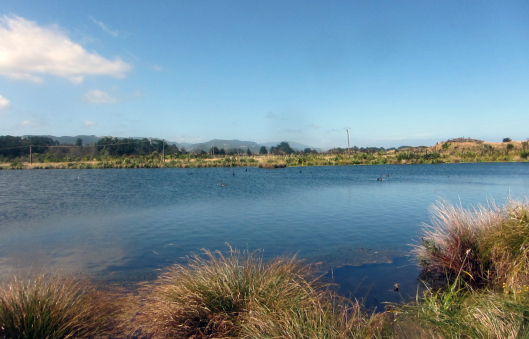
Kāpiti Coast District Council is again advising people to keep away from dead birds in or near waterways in the district.
Signs of avian botulism, a disease that causes paralysis and death in birds, have been identified in a number of ducks and seagulls at Waikanae Beach’s Pharazyn Reserve.
“Birds affected with avian botulism typically show signs of paralysis, are unable to fly, and have drooping heads. Wild and captive bird populations, most notably waterfowl, can contract the disease, but it does not cross over to human beings,” says Council Biodiversity Programme Manager Rob Cross.
Mr Cross says the disease is spread to other birds through the carcasses of those killed by avian botulism, and can make dogs and cats sick if they eat a dead bird infected with the disease.
“Anyone who sees a dead bird in the reserve area is strongly advised not to touch it – they should inform the Council so our staff can remove them and dispose of the carcasses safely.”
Health authorities say avian botulism is unlikely to pose a threat to humans, but can be passed onto cats and dogs. Mr Cross says that pet owners should be vigilant and watch that their pets don’t go near any bird carcasses.
Most outbreaks of avian botulism occur during summer when there is less oxygen in waterways due to lower water levels. This causes decaying plant growth and the perfect microclimate for the toxin to occur. Outbreaks are managed through the removal of infected carcasses and, once cooler weather comes, the disease generally runs its course.
Anyone who sees sick birds at Council reserves, as opposed to those that have already died, should inform the Kapiti SPCA.
18 Sunday Feb 2018
Posted in Uncategorized
This was received at 17:30 last Friday evening. It’s believed the Council was aware of the issue since Anniversary Weekend (22 January), see this Joel Maxwell story.
“Following on from the reported link between the Raumati splash pad and cryptosporidium, the Kāpiti Coast District Council would like to remind people who’ve recently had diarrhoea or a tummy upset that they shouldn’t swim in public pools or attend splash pads for at least two weeks, as bugs like crypto can spread quickly in shared water.
‘As soon as the Council was notified that there was a possible connection at the Raumati splash pad, we took appropriate action and closed the splash pad as a precautionary measure,’ says Mr Pedersen. ‘We are working with Regional Public Health who are the lead agency on this matter.’
“The best way to prevent cryptosporidiosis infection is to always practice good hand washing and drying after using the toilet, changing nappies, and before preparing or eating food. Stay home from school or childcare centres until 48 hours after the diarrhoea stops. Also, remember not to share bugs by avoiding swimming pools and splash pads while sick and for two weeks after symptoms stop.
“Cryptosporidium is a parasite that lives in the intestines of people, birds, and animals. It produces cysts (eggs) that can survive in the environment for a long time. When a person, bird, or animal is infected they pass out the cysts in their faeces.
“Cryptosporidium is most often spread by hands contaminated with faeces during toilet use or nappy changing. From hands, it can spread to surfaces, toys, food, and water. It also spreads in shared water such as swimming pools. When the cysts are swallowed, the person then becomes infected.”
17 Saturday Feb 2018
Posted in Uncategorized

Has the Kapiti Coast District Council been sitting on news of a cryptosporidium outbreak for a week? Judging by today’s events, and the Council’s own admissions, it seems so, meaning there’s some tough questions to be asked of the Council about when it knew of the risk to the public, and why didn’t it notify people sooner?
To put this in perspective, on average around 1,500 people a day use Raumati’s splash pad, making it one of the most popular recreational facilities in the district, especially for families with young children.
17 Saturday Feb 2018
16 Friday Feb 2018
Posted in Uncategorized
Media release from the KCDC
 Following the launch of a multimedia exhibition showcasing the journey of the Treaty of Waitangi through the Kapiti Coast District, the Council is taking the show on the road.
The display, Te Tiriti: ‘Me huri whakamuri, ka titiro whakamua’, was launched on Waitangi Day and focuses on the relationship and significance of the Treaty of Waitangi to the Kapiti Coast.
Mayor Gurunathan says that the exhibition -– featuring a printed historical account, photographs, maps, and a documentary of interviews with living relatives of Treaty signatories –- is a valuable educational tool for Kapiti Coast residents who want to learn more about our district’s rich cultural history.
Schedule
7 February – 6 March, Paraparaumu Library
6 March – 3 April, Otaki Library
3 April – 8 May, Paekākāriki Station Museum
8 May – 5 June, Waikanae Library
