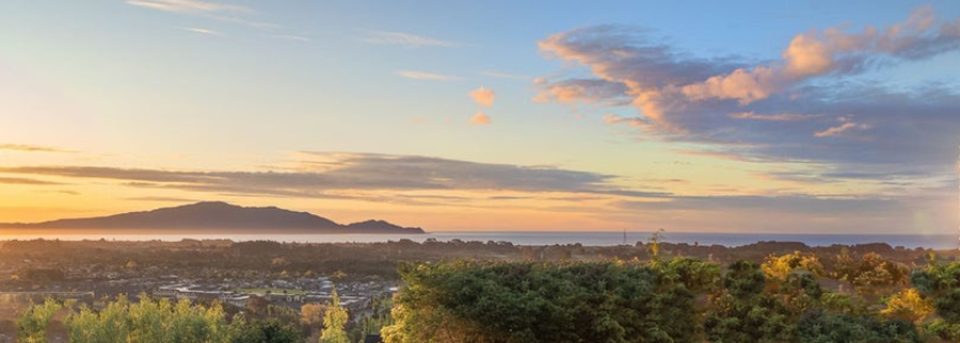
This intention was announced 3 years ago as part of the old SH1 revocation plans and the NZTA/Waka Kotahi contractors have begun initial work.
The works include the construction of foundations at both ends of the bridge and the project will take about 2 months according to the NZTA. The new lane — which will measure 2.5 metres wide and approximately 80 metres long — will have safety barriers and retaining walls (we assume at the abutments).
There will be only one path on the downstream side of the bridge and it is planned to be for both cyclists and pedestrians. Cyclists travelling south will either have to cross the road or just continue over the traffic lane. It’s not stated what will be done with the existing sidewalk on the bridge which is on the same side as the new path: to be left as is?
Motorists are advised that a lane closure over and leading up to the bridge to allow the works to be carried out is involved, with stop/go traffic control in place. We think there will be no pedestrian access to the area shown in the pic either.
Government policies in many countries including New Zealand have unnecessarily stoked negative feelings. This in turn has had a negative effect on economic conditions. In times of social anxiety, people stockpile goods and seek to recoup actual and imagined trading losses or goods shortages through increased prices. Uncertain conditions also magnify opportunities for unscrupulous traders to engage in price gouging which is reflected in the current large cost of living rises.
Quality of life is the main priority of all economic policy. My PhD thesis focused on the influence of human factors on the global economy and national competitive advantage. I tracked over 200 social and economic indicators during a seven year period in 46 developed nations. One interesting result was the large positive effect of participation in meditation practice on quality of life and economic vibrancy.
Daily meditation practice reduces anxiety and anger, increases creativity and greatly improves health. The pandemic has been characterised by increases in essentially opposite qualities. The psychological profile of the pandemic includes increases in fear and anxiety, expressions of anger and disappointment, and a decline in general health and life expectancy.
All of these characteristics decrease the individual and collective ability to think clearly and creatively—essential components of economic success.
Economic fear snowballs in much the same way as a bear market sentiment does. Marginal increases in prices increase anxiety and drive a tendency to charge even higher prices. In a global economy, the effects are magnified further. Pressures on fuel prices and reduced productivity due to lock downs and regional conflicts only exacerbate the effects.
Government pandemic policies and pronouncements have been greatly influenced by medical administrators, epidemiologists, pharmacologists, and immunologists. It is worth reflecting that 99% of the factors which have a positive preventive influence on health are related to our diet, environment, behaviour, and happiness. Medical interventions tend to be made in urgent or emergency situations.
The fearful psychology associated with emergency medical interventions has inevitably crept into the medical advice being given to and then offered by governments. This has influenced our economic expectations and activity.
The Covid pandemic is now realised to be on a par with flu epidemics, not with medical emergencies. To preserve the stability of the economy, governments should be rapidly cooling the pandemic fear factor and helping people to realise that we are no longer in an emergency situation. A great deal of reassuring data has been recently published.
Speculative and unsubstantiated talk of future variants, new pandemics, resurgence of infections, and exaggerated Covid mortality, which have been especially prevalent in New Zealand and many other countries, leads to a panicked approach to everyday life and instability in economic relations.
Moreover this acts to freeze larger scale private and public innovative economic initiatives and projects, as anxious people tend to be risk averse. Anxiety pushes people towards a fight or flight psychology, looking for bolt holes rather than undertaking new projects.
Vaccination mandates have also had an effect on the workforce. They have resulted in a loss of highly qualified personnel in many sectors. We sometimes forget that marginal changes in economic and social parameters such as the skill base are strong drivers of economic performance or decline.
Moreover the introduction of unfounded prejudices against unvaccinated people tend to create dysfunctional economic profiles that are characteristic of countries in the throes of conflict. There is currently no statistically significant advantage of reduced infection, hospitalisation, or mortality conferred by mRNA Covid vaccination, and therefore no basis for this prejudice. The government needs to explain this honestly to the population and reopen all sectors to unvaccinated workers.
In New Zealand our tourism sector previously worth $38 billion per annum has virtually disappeared, it will not revive until the outward signs of fear, such as mask mandates and excessive testing, are scaled back. We need to welcome visitors, not scare them away.
The government’s health spending priorities were distorted during the pandemic on the advice of planners dazzled by the unsupported promise of risky biotechnology. So far our government has spent nearly $100 billion on the Covid response. Far more than the entire health budget for all other conditions, actually on a par with the entire pre pandemic annual budget of the whole government. They plan to spend even more in the near future.
Our health services should broaden their focus back to a wider range of serious conditions and rebalance health priorities. These are ordinary considerations of a traditional health economics perspective. In addition they should plan how to address the needs of those affected by vaccine injuries and long Covid.
The media needs to broaden their approach to reporting, away from an overwhelming focus on divisive pandemic fear mongering. They need to admit that some serious mistakes were made and apologise for their promotion of misinformation. The fear economy will never evaporate until people are fully informed rather than manipulated.
Ultimately economic performance is strongly affected by both psychology and health. Government planners need to close the curtain on overhyped fearful pandemic advice and expenditure that is not founded on current scientific publishing. They need to cool down the collective temperature of society.
Temperatures in Britain will feel much cooler from Sunday and into next week as the mercury falls to below-average levels — although the sunny weather is set to stay for now, forecasters say.
The pleasant weather will continue for much of the UK today and tomorrow with 22C (72F) highs expected in the South East, before the warmth begins to retreat on Saturday with 18C (64F) – and then 16C (61F) on Sunday.
And despite the sunshine continuing throughout, conditions could be even cooler in London with only 14C (57F) expected on Sunday – below the average temperature for the month of May in England which is 16C (61F).
While some claim the electorate had become tired of a three-term government and others believe there was a pro-climate change aspect to the vote, what was evident was a growing disenchantment with ‘establishment’ parties and a shift towards alternatives.
The same patterns of disenchantment is evident here. There is no doubt that an “anyone but Jacinda” groundswell has emerged and is gaining momentum. The question is can the Ardern Labour Government reverse the sentiment for change before the next election? With eighteen months to go, they have time on their side, but the two major announcements they made last week reinforce doubts about their competence to rescue their sinking ship.
Inflation reached a thirty-year high of 6.9 percent in March. That was due in a large part to two years of unprecedented borrowing and spending by Labour. Nevertheless, they have decided to fuel the fire with a record $10 billion of new spending announced in Budget 2022.
Of that, some $3 billion was earmarked for their climate change Emissions Reduction Plan, around $6 billion was new spending allocations built into Budget 2022, and an additional $1 billion cost-of-living crisis package was tacked on at the last minute to counter the traction being gained by opposition parties.
Furthermore, in response to claims by the opposition that he has “an addiction to spending”, the Finance Minister Grant Robertson has changed the way debt is reported by the Government – so it doesn’t look so bad!
Let’s examine some of the detail, starting with Labour’s whitewashing of debt.
The traditional measure of debt used by successive governments is “Net Core Crown Debt”. This is the sum of the debt owed by Government Ministries and Departments, and the Reserve Bank, minus their financial assets. It does not include the assets or liabilities of Crown Entities, any ‘advances’ made by the Government, nor the significant assets of the Super Fund.
Budget forecasts showNet Core Crown Debt in 2022 stands at $133.6 billion – the highest it has ever been – peaking at $173.3 billion in 2024. As a percentage of all economic activity, the 2022 debt is 36.9 percent of GDP – rising to 41.2 percent of GDP in 2024.
The new debt measure Minister Robertson has introduced, essentially halves the old debt measure. Called “Net Debt”, this new measure takes the old measure of Net Core Crown Debt of $133.6 billion, adds in the $14 billion of Crown Entity debt (including Housing NZ’s $7b in loans and the NZ Transport Agency’s $4b) then subtracts assets including the Super Fund’s $60 billion and $26 billion in government advances (including the $10b owed in student loans and the Reserve Bank’s $10b lending programme).
As a result of these changes, the debt balloon is ’magically’ reduced from $133.6 billion (36.9 percent of GDP) to a far more ‘respectable’ $61.2 billion (16.9 percent of GDP)” – $72.4 billion in debt erased in an instant!
Magically, Labour can now have us believe they haven’t created a massive debt burden for the country – as the Prime Minister was quick to demonstrate in her Budget speech, when she said, “Debt sits at 16.9 percent and is forecast to reach 15 percent in 2026. We’ve had a bigger economic knock from the pandemic but managed with a similar debt impact to the GFC.”
To understand her reference to the Global Financial Crisis, we looked back and found that in 2011 during the GFC, Net Core Crown Debt rose to 19.5 percent of GDP. In comparison, this year’s Net Core Crown Debt of 36.9 percent is almost double the debt impact of the GFC.
It seems that comparing the newNet Debt measure for Budget 2022 of 16.9 percent with the oldNet Core Crown Debt measure of 19.5 percent in 2011, has enabled the PM to magically claim her Government has generated “a similar debt impact to the GFC”.
It will be interesting to see whether the media fact-check the PM as readily as they do others – or whether they will turn a blind eye to her claim that Labour’s financial management is better than National’s during the GFC.
The first of last week’s major announcements was the Emissions Reduction Plan – a $2.9 billion grab-bag of initiatives that will have no effect on the global temperature, but will fuel inflation, undermine our economic resilience, and lead to a reduction in living standards.
The plan included a ‘cash for clunkers’ deal to subsidise low-income families into eco-friendly cars, the construction of 100 kilometres of new cycleways, and a commitment to embed the Treaty partnership and matauranga Maori into the climate response – although quite how embedding the Treaty partnership is going to save the planet from climate Armageddon is not clear.
The Prime Minister explained, “no challenge is more present today and in the future than that of climate change… This $2.9 billion investment is the most comprehensive plan New Zealand has ever had on the issue of climate change. And it’s because we cannot responsibly postpone a transition we need to start making today.”
But here’s the reality, that Labour and the Greens – and the media – do not talk about. The world’s three major emitters – China, India, and Russia – have stated they intend to continue building coal-fired power stations and increasing emissions until 2060 and 2070.
Since New Zealand’s contribution to greenhouse gas emissions is infinitesimal on a global scale, our sacrifice, forty years ahead of any action from them, makes no rational sense at all – if reducing global emissions is, in fact, the objective.
If that’s not the objective, and climate change is being used by Labour and the Greens as a front to advance their socialist agenda, then, with almost no opposition pointing out that it’s impossible to maintain prosperity, when climate alarmism is penalising wealth creators and undermining economic growth, they are getting a free ride.
Furthermore, our Prime Minister’s obsession with being seen to be leading the world in climate action, means we are suffering far harsher restrictions than our trading partners.
What makes all of this so much worse, is that the United Nations Intergovernmental Panel on Climate Change – the body the Government relies on for advice – has already explained that if a country has an Emissions Trading Scheme in place, no other policy interventions are necessary to meet emissions targets: “If a cap and trade system has a sufficiently stringent cap to affect emission‐related decisions, then other policies have no further impact on reducing emissions”.
New Zealand does have a fully functioning ETS in place, which means Jacinda Ardern’s $2.9 billion policy package, that’s equivalent to $1,500 of spending for each Kiwi household, is needless – yet more wasteful ‘look-good’ spending that has become the hallmark of the Ardern administration.
When it comes to the Budget, this week’s NZCPR Guest Commentator, journalist Richard Harman – the founder of the political news website Politik – described it as ‘defensive’ and designed ‘to cut off National’s initiatives before they got any real political oxygen’:
“In his speech in the Budget debate, National Leader Christopher Luxon repeatedly talked about a ‘cost of living crisis’ induced by the current inflationary forces. Their answer is to raise the tax thresholds, which would see someone on the median wage ($56,160 a year) get an extra $800 in the hand.
“Finance Minister Grant Robertson, instead, is proposing a ‘temporary’ rebate of $27 a week for those earning less than $70,000. It will apply for only three months which Robertson says will means each payout will be $350. It is estimated to cost $814 million, and the Government is paying for it out of $3.2 billion of leftover funds in the Covid Response and Recovery Fund.
“The current excise duty and road user charges cuts are to be extended for two months, and half-price public transport extended for another two months and made permanent for Community Services Card holders from September.
“In essence, all this was Robertson’s response to Luxon’s ‘cost of living crisis’.”
If Labour’s $1 billion cost-of-living package felt like a last-minute add-on, that’s because it was.
Official advice warning against the scheme, was given to the Government on May 4 – just two weeks before the Budget: “The Treasury has advised that strong aggregate demand, combined with constrained supply and a tight labour market, will result in inflation staying above target in the near term. In this context, an increase in the level of fiscal support would further exacerbate inflation.”
There were also grave concerns over the rushed timeframe: “Given the narrow scope of the commissioning and the speed at which advice was produced, the advice does not include consideration of the full range of options for addressing the issue of increased costs of living for many New Zealanders. Owing to the very compressed timeframes… there is a risk that significant issues with the resulting proposal have not been identified.”
In response to the package, the Reserve Bank has signalled its intention to tighten monetary policy, which will impact on interest rates and affect economic activity and house prices – which are forecast to fall throughout 2022 and 2023.
Another Budget initiative was Labour’s new law to prevent supermarkets from blocking competitors accessing land for new stores – a cynical move designed to ensure concerns over rising food prices are directed at supermarkets. However, it’s important to remember that a key driver of food price inflation is the Government’s zero-carbon policies – namely the almost 20-cents a litre carbon tax on petrol, which increases costs throughout the whole economy, especially on the production and supply of food.
A key feature of the Budget was $11 billion in health funding, which the Finance Minister proudly claimed was the largest ever increase in health spending – as if the spending itself was the triumph rather than the benefits it is meant to deliver.
This spending has become necessary because of Labour’s decision to restructure the health system to introduce Maori co-governance. Part of the funding will be used to clear the debts of the District Health Boards which are scheduled to be abolished on 1 July. The Government says this will give health a ‘fresh start’. But with the so-called ‘fresh start’ creating two classes of patient – Maori and everyone else – that too is fanciful spin.
With anecdotal evidence showing the health system is ill prepared for this radical change, the reality is that no responsible government would cause such disruption during a pandemic – only one driven by radicals. In this case, the fifteen MPs of Labour’s Maori Caucus are putting their desire for tribal control of health ahead of the needs of all other New Zealanders.
These MPs have also been successful in directing over $1 billion of the budget into race-based Maori initiatives. While Maori Development Minister Willie Jackson claims it was the highest Maori budget “in the history of Government”, the Maori Party predictably say it is not enough!
In the aftermath of the Budget, a consensus is emerging that Labour is devoid of ideas to address the problems facing New Zealand. Instead of dealing with the cost-of-living crisis by simply adjusting tax thresholds for inflation – to put more money into the pockets of Kiwis who earned it and prevent them being forced into higher tax brackets – Labour opted to turn us into a nation of beneficiaries.
Once their new scheme is underway, over 80 percent of New Zealanders will receive some form of support – either the Winter Energy Payment or the cost-of-living payment.
In the lead up to the Budget, it became clear that Labour needed a circuit breaker to arrest its decline in the polls and regain control of the political narrative. But if a $350 payment to turn the country into a nation of beneficiaries is the best they can come up with to deal with a cost-of-living crisis then one has to conclude that the Labour Government is the problem.
According to Kiwibank’s chief economist, for those with mortgages (and most people have them) Robertson’s $350 cost-of-living bonus announced last week in the Budget has been already taken away with the Reserve Bank’s cash rate rise. —Eds
A great mystery of 2022 is how it came to be that the Upper Hutt and Lower Hutt Mayors formed polar opposite views on Three Waters.
Three public opinion polls in the two cities have revealed strong resident opposition to the Labour Government’s centralisation of water management, including 50% iwi control through co-governance.
So how is it that, despite public opposition in both cities, Mayor Wayne Guppy of Upper Hutt is opposed but Mayor Campbell Barry is not?
The answer is pretty straight-forward. In 2019 Cr Campbell Barry campaigned for the Hutt City mayoralty under a Labour ticket. What the public were never told is that the Labour Party exacts a high price from candidates who use their trademark.
It will surprise most people to learn that the Labour Party requires that candidates using the Labour logo sign a pledge to support and implement Labour policy irrespective of the views of local residents. Further, all Labour candidates in a local body election pledge to block vote on issues of Labour policy.
The rewards for this abdication of local loyalty are political career opportunities and campaign assistance – databases, email systems, door knocking volunteers, billboard teams and social media support. One recent bauble was Mayor Barry’s appointment to the Labour Government’s Three Waters review taskforce, a body that reported back very recently with, you guessed it, no substantial changes to the policy opposed by the majority of Lower Hutt’s residents.
The Labour Party Constitution in force during the 2019 council elections contains Rule 95 (linked below):
R95: Any person accepting nomination as a Party candidate shall sign a pledge ….R95(e): I will faithfully observe the Constitution and Policy of the Party and the policy of the party for the [Lower Hutt] district.
R95(f): If elected, I will vote … in accordance with the decisions [of the Labour ticket members].
And the following rule dictates that Labour candidates will support each other no matter what:R95(c): I will wholeheartedly support the duly selected candidates of the Party in the [Lower Hutt] district.
And do note that the first Objective (R3) of the Labour Party is “to elect [candidates] for the purpose of giving effect to Party policy and principles”. Rule 152 says that “The Policy Platform is binding on … all Labour Party members elected to public office who describe their affiliation as “Labour” or “Labour Party” on the ballot.
Labour candidates are subject to a Disciplinary Process with multiple possible sanctions if they breach their pledge [R309]:
Rule 313: Disciplinary action shall be applied for and ruled upon on the grounds of:
(a): contravention of the Principles, Rules and Policies of the Party as contained in the current Constitution and policy documents of the Party, including under (c) – being automatically suspended for two years for publicly campaigning against another Labour candidate.
The four KCDC Councillors who are known Labour Party members are Rob McCann, Janet Holborow (who was on the Labour list in the 2020 general election), Jackie Elliot and Sophie Handford. Guru and Prvanov might be, but we don’t know for sure. Only the first ran under the Labour banner in 2019 and we’ve heard murmurings that local Labour members are unhappy with his support for the Gateway and closure of the Waikanae recycling facility. —Eds
Yesterday, Dear Leader appeared on her best buddy Stephen Colbert’s TV late night show in New York crowing about the success of her gun “buy-back” in 2019. But she didn’t buy them back — she made several categories of gun illegal and then paid a limited amount of compensation to law abiding citizens who handed them in.
Billy McFarlane said on TV Three’s AM show today that any claim of success is nonsense — the government didn’t know how many such guns were out there, and maybe only 10% of them were given to police to destroy in return for some government cash. Most of the rest went into the hands of the underworld, and Jacinda only helped to raise their prices. He gave the example of a handgun being worth $500 before, $10,000 now. Some still come across the border. As is said in America, “if guns are outlawed, only outlaws have guns.”
On the same night she was promoting her ‘success’ to Americans, at home there were reports in Auckland of 7 drive-by shootings overnight; another 2 happened last night. So she hasn’t solved the problem at all.
As we pointed out at the time, military style semi-automatics are not a weapon of choice for criminals — they are hard to conceal, heavy, unwieldy and difficult to use — hand guns and sawn-off shotguns are the weapons of choice. About 93% of crimes, including homicides, involving guns in America are with handguns; 6% with ordinary rifles and 1% with MSSA’s. They just aren’t a big problem. This is why the MSSA ban imposed in America in 1994 during the Clinton administration for 10 years wasn’t renewed in 2004 under the George W. Bush administration and was not re-imposed during the Obama administration either.
What is the answer to the problem then? Fortunately, NZ isn’t awash with hand guns like America is; that requires its own solution. In NZ the issue of what makes people join gangs is what has to be looked at. Unstable home environments, social rejection and poor education standards have to be among the reasons. It’s unlikely drugs are as big a factor as people think they are, although they are widely trafficked and consumed. Billy McFarlane says that at present the rate of gang recruitment is about equal to that of the police and is likely to become much higher.
The idea of digging up your backyard can be intimidating. If you’re a green-thumb novice who is not sure how to start a garden, the fear of making a mistake can make you quit before you even start. “Gardening is not always a cheap hobby,” says Lara Hermanson, gardener and co-owner of Farmscape, an urban farming company in San Francisco and Los Angeles. “Home gardeners can rack up big bills by shopping at a nursery, only to get it home and have items fail, without knowing why.”
Even though the process of growing plants and vegetables from scratch may seem daunting, we found out the most common mistakes—and how to avoid them. Read on for 10 tips on what not to do, according to experts who school you on first-timer no-nos.
Mistake 1: Setting too lofty of a gardening goal
A bigger garden isn’t always better, at least if you’re a beginner, notes Megan Gilger, the gardening blogger behind Fresh Exchange. “It is easy to let your eyes get big when wandering the plant stores or looking online at ideas,” Gilger says. “Instead use those ideas to spur a bigger plan. Growing a great garden successfully takes time.” Gilger advises gardeners who are creating a garden from scratch to start small, but think big. A garden is a long-term investment and you should think about your goals three to five years from now.
Mistake 2: Not interplanting
Let all of your buds play together. “Break away from the idea that you can only grow one type [of plant] in a bed,” Gilger says. Interplanting, or intercropping, is a gardening practice that encourages pairing companion plants, as well as bundling taller and shorter plants. Mixing and matching can also whittle weeds and bring in beneficial pollinators, she explains. Bonus: Interplanting is also said to reduce pests and disease.
Mistake 3: Overcrowding plants
Although mixing plants together is A-OK, you still have to be mindful of spacing, notes Michael Giannelli of East Hampton Gardens, a garden and home shop in East Hampton, New York. “[People] want that instant garden full and colorful—big mistake,” he says. “Plants need room to grow and spread naturally.” Follow the planting recommendations, which typically suggest 2 to 3 feet between plants. You can probably cheat a little by skirting the recommendations by a few inches, but don’t pack plants side by side like sardines.
Mistake 4: Planting too much variety
Tempting as it may be to plant everything from acorns to zucchini, focus on growing vegetables, herbs, and flowers that bring joy to your plate. “It seems simple, but you are most passionate about growing the vegetables, herbs, and flowers you already find yourself grabbing for at the grocery store or farmers market,” Gilger says. No need to fuss over fennel if you think it tastes blah.
Are the Leftists including Jacindanistas who vigorously promoted the Scamdemic pleased with themselves?
George Soros and faithful supporters.
As the cost of essential goods rises faster than it has in decades, billionairesin the food and energy sectors are increasing their fortunes by $US 1 billion every two days.
For every new billionaire created during the pandemic — one every 30 hours — nearly a million people could be pushed into extreme poverty in 2022 at nearly the same rate, reveals a new Oxfam brief today. “Profiting from Pain” is published as the World Economic Forum — the exclusive get-together of the global elite in Davos — takes place for the first time face-to-face since COVID-19, a period during which billionaires have enjoyed a huge boost to their fortunes.
“Billionaires are arriving in Davos to celebrate an incredible surge in their fortunes. The pandemic and now the steep increases in food and energy prices have, simply put, been a bonanza for them. Meanwhile, decades of progress on extreme poverty are now in reverse and millions of people are facing impossible rises in the cost of simply staying alive,” said Gabriela Bucher, Executive Director of Oxfam International.
The brief shows that 573 people became new billionaires during the pandemic, at the rate of one every 30 hours. We expect this year that 263 million more people will crash into extreme poverty, at a rate of a million people every 33 hours.
Billionaires’ wealth has risen more in the first 24 months of COVID-19 than in 23 years combined. The total wealth of the world’s billionaires is now equivalent to 13.9 percent of global GDP. This is a three-fold increase (up from 4.4 percent) in 2000.